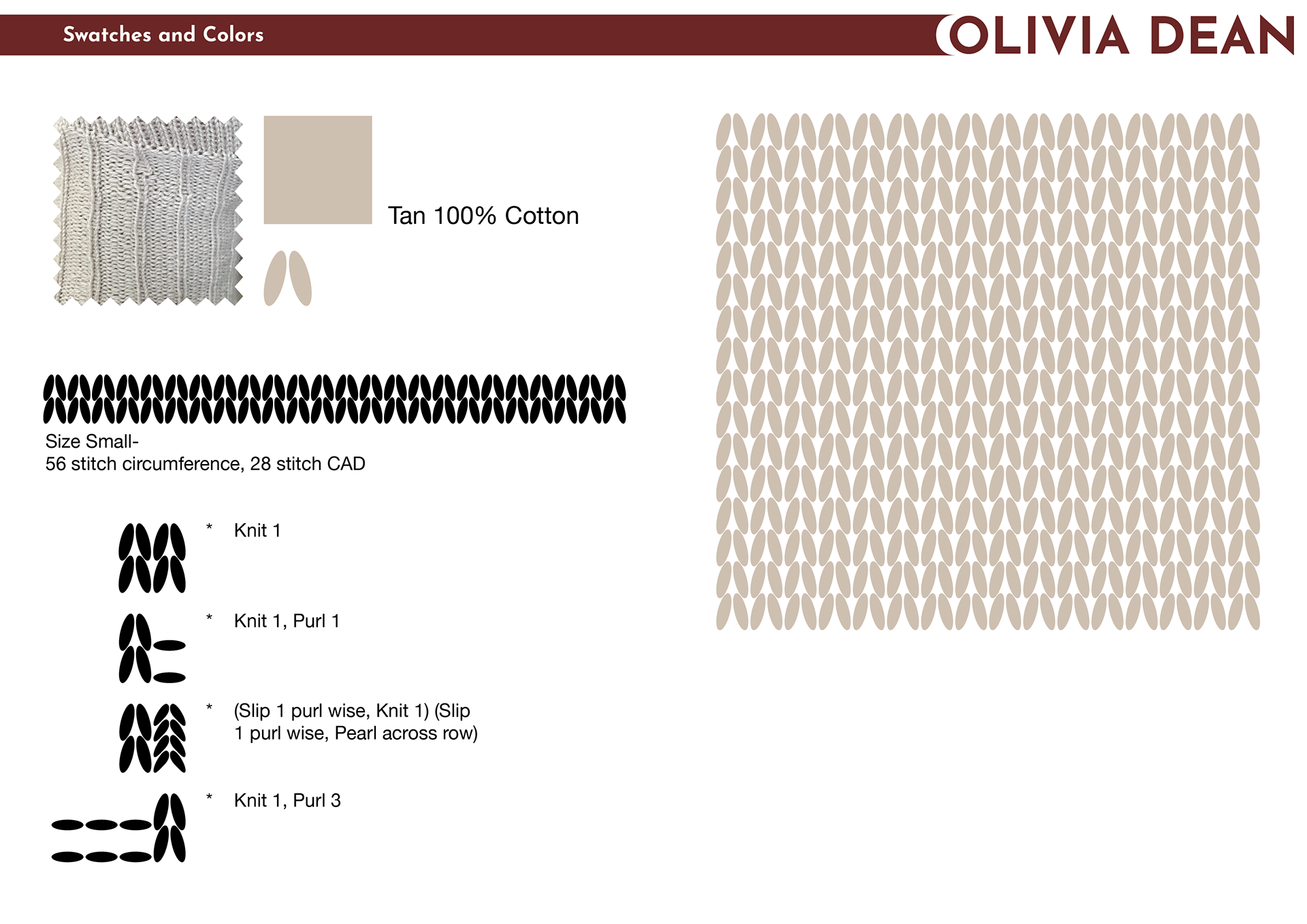
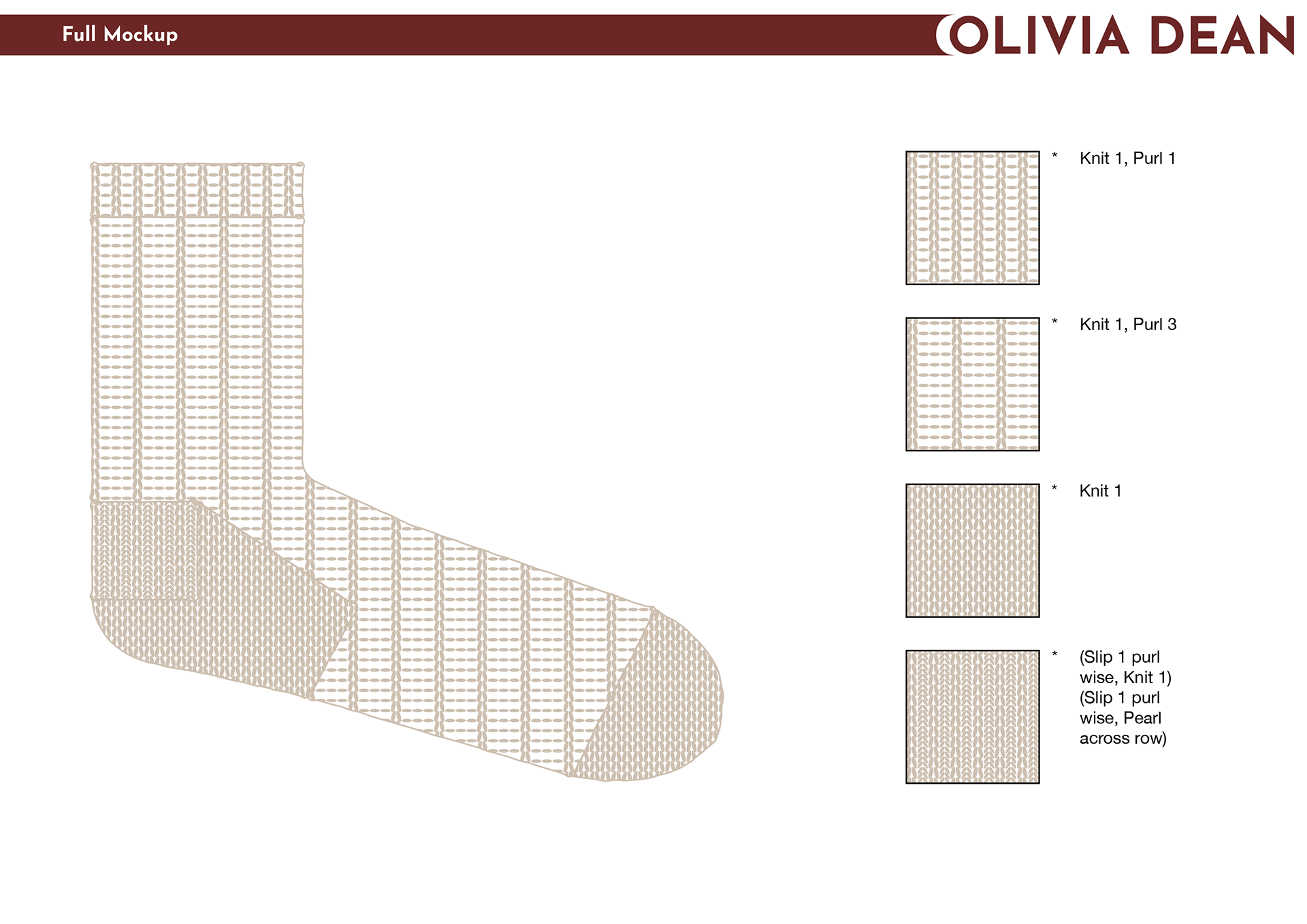
Cotton Socks
Designing hand-knitted socks with tan dyed cotton yarn
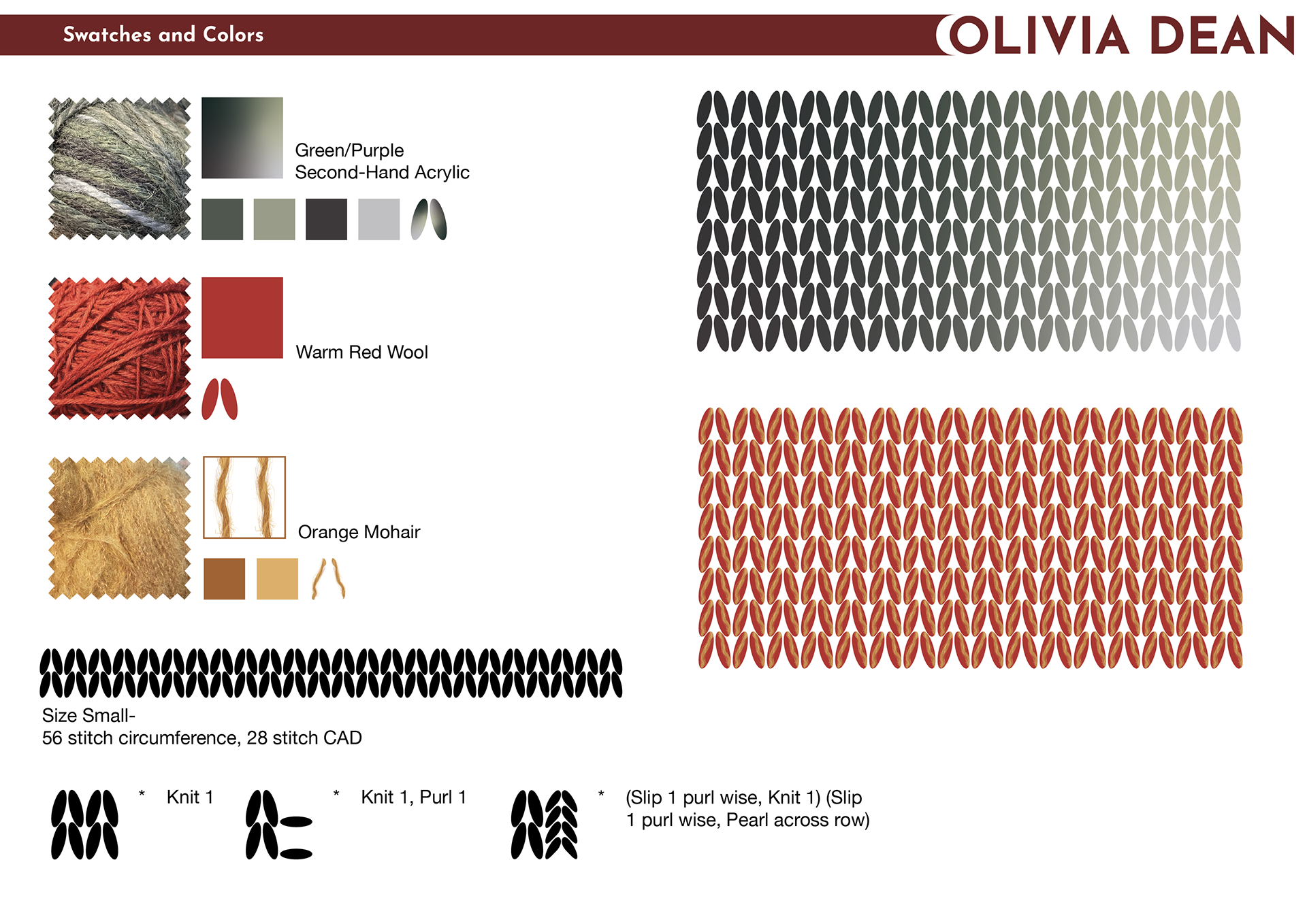
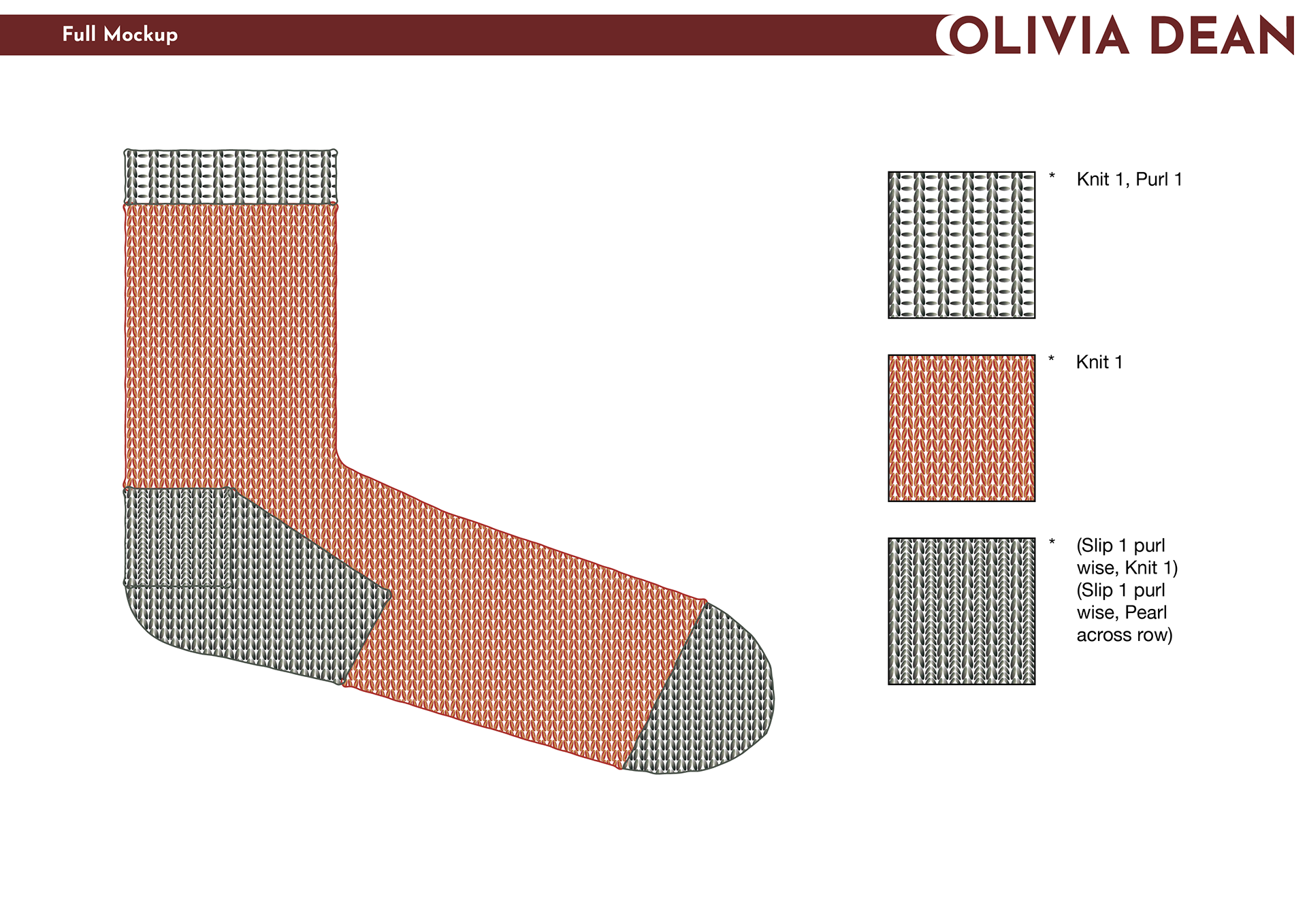
Wool Socks
Designing hand-knitted socks with wool, mohair, and recycled acrylic yarn
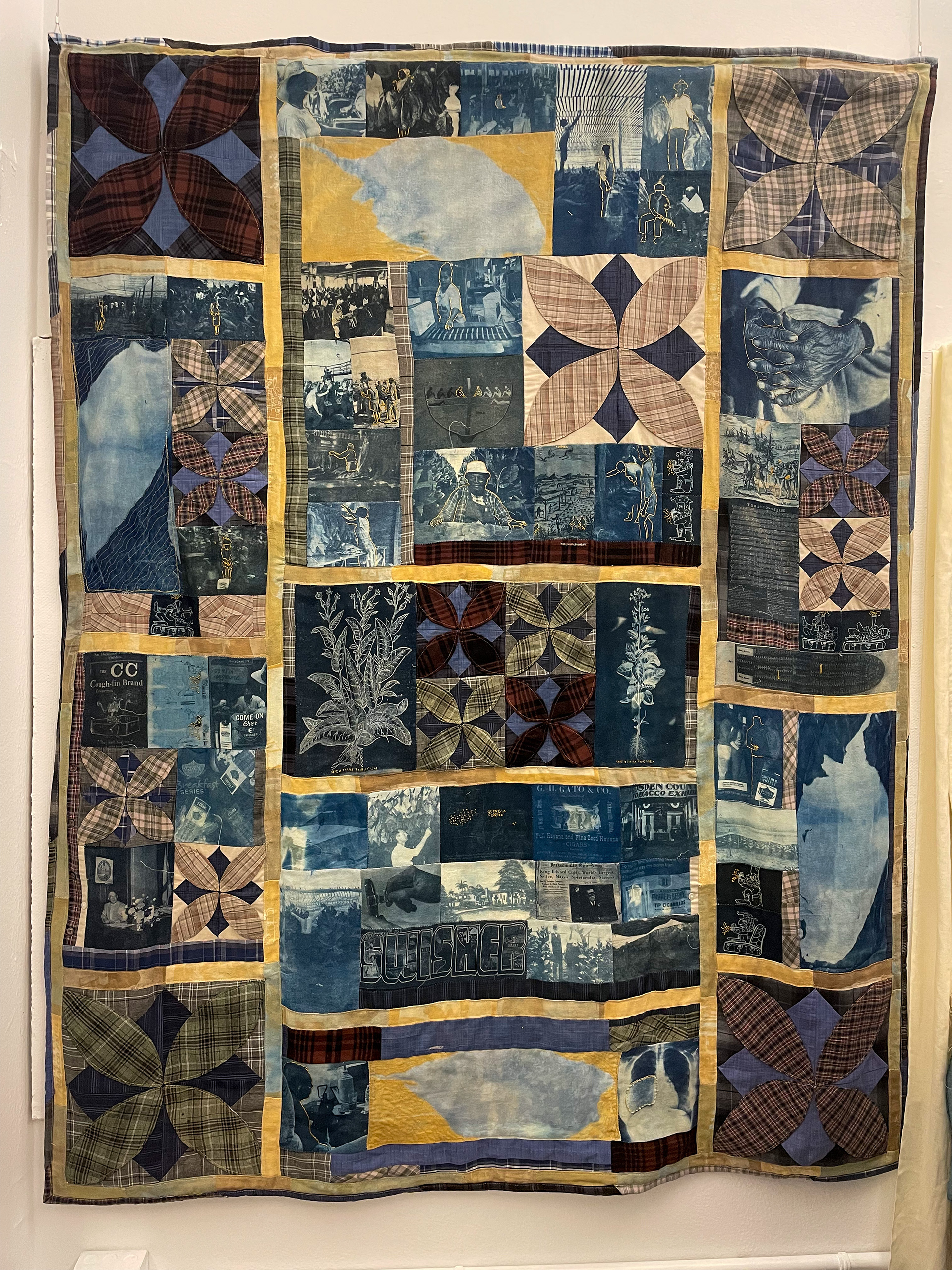
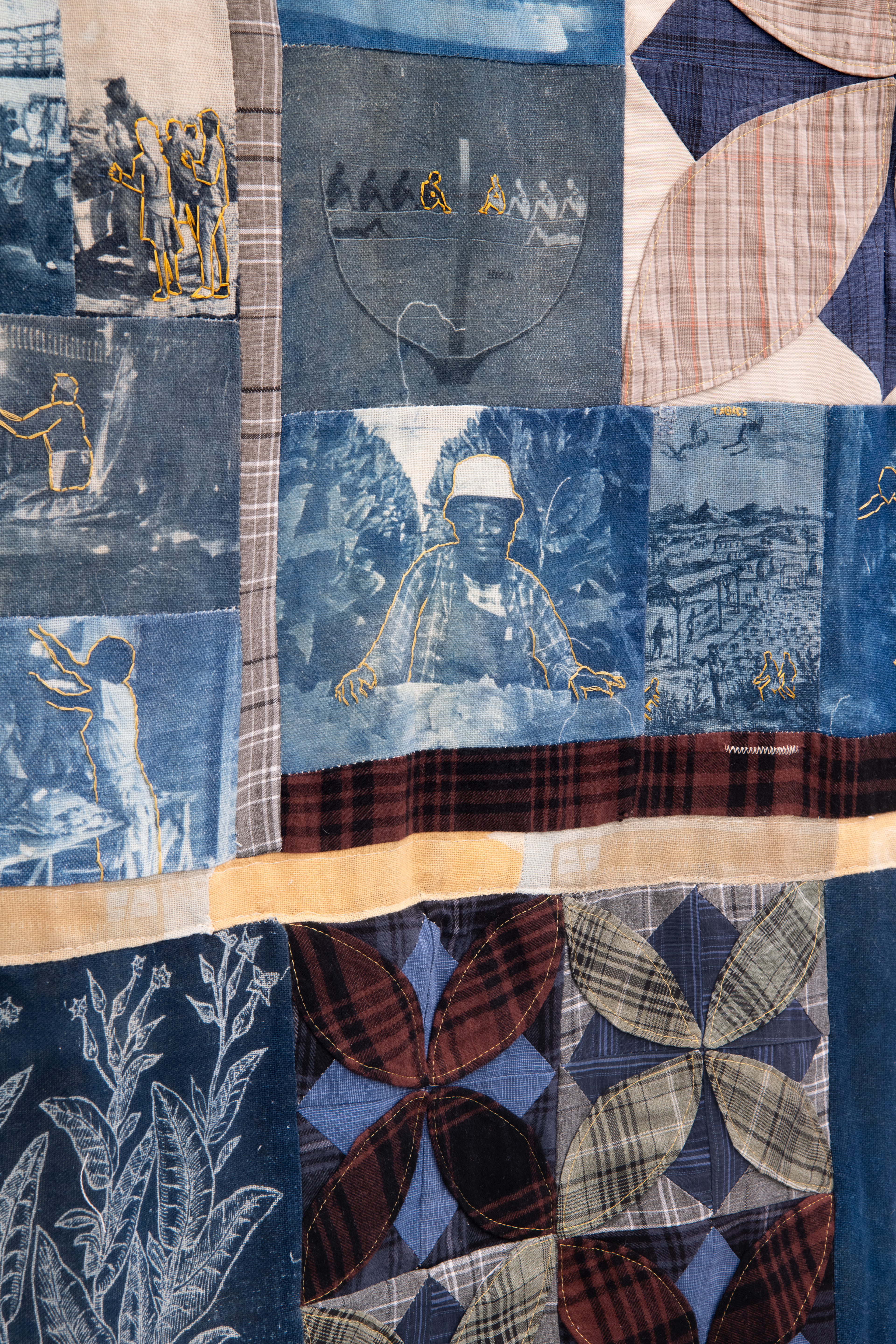
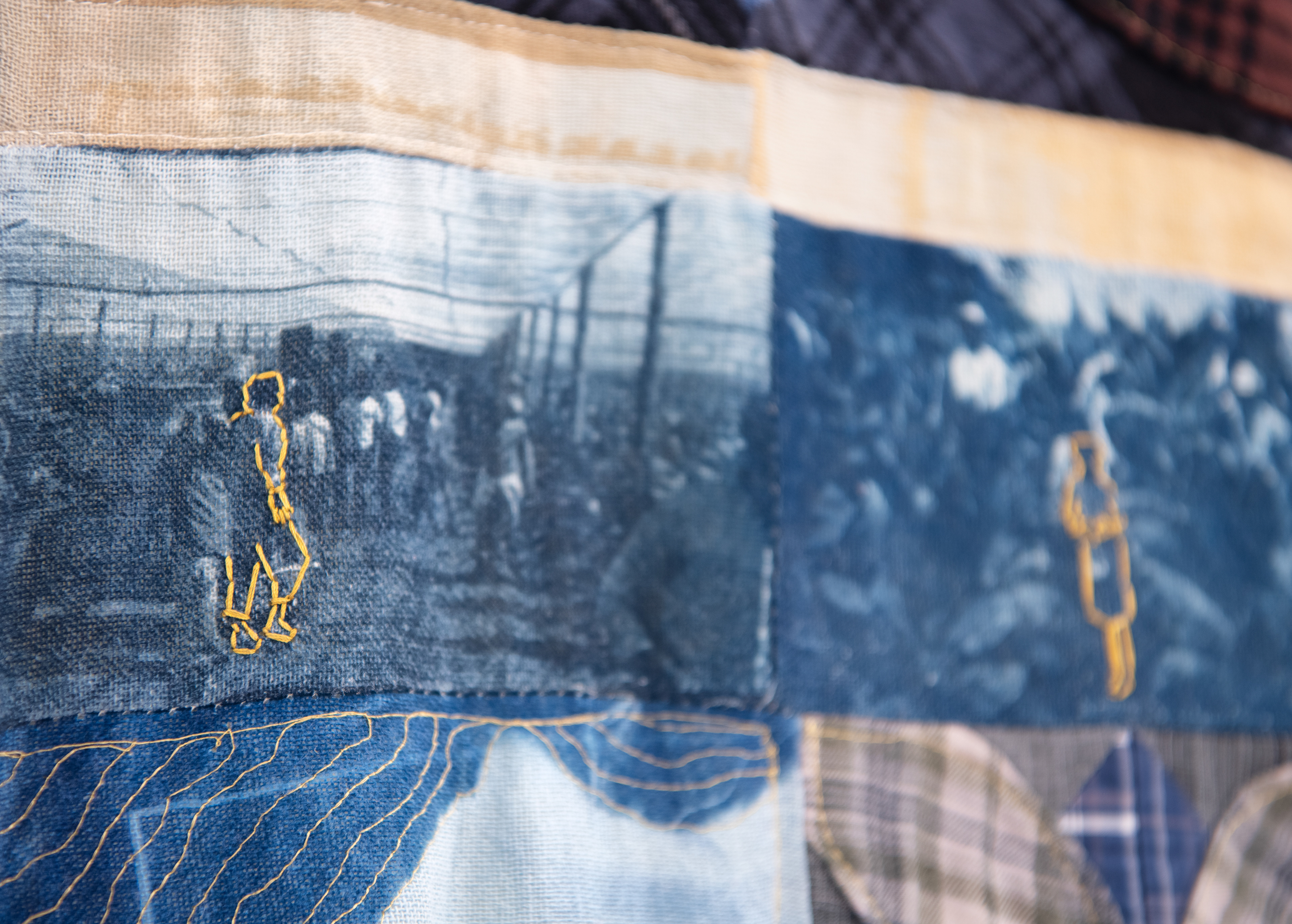
Sun-Cured History and Plaid Memories
Shifting perspective through photography and quilting of tobacco research.
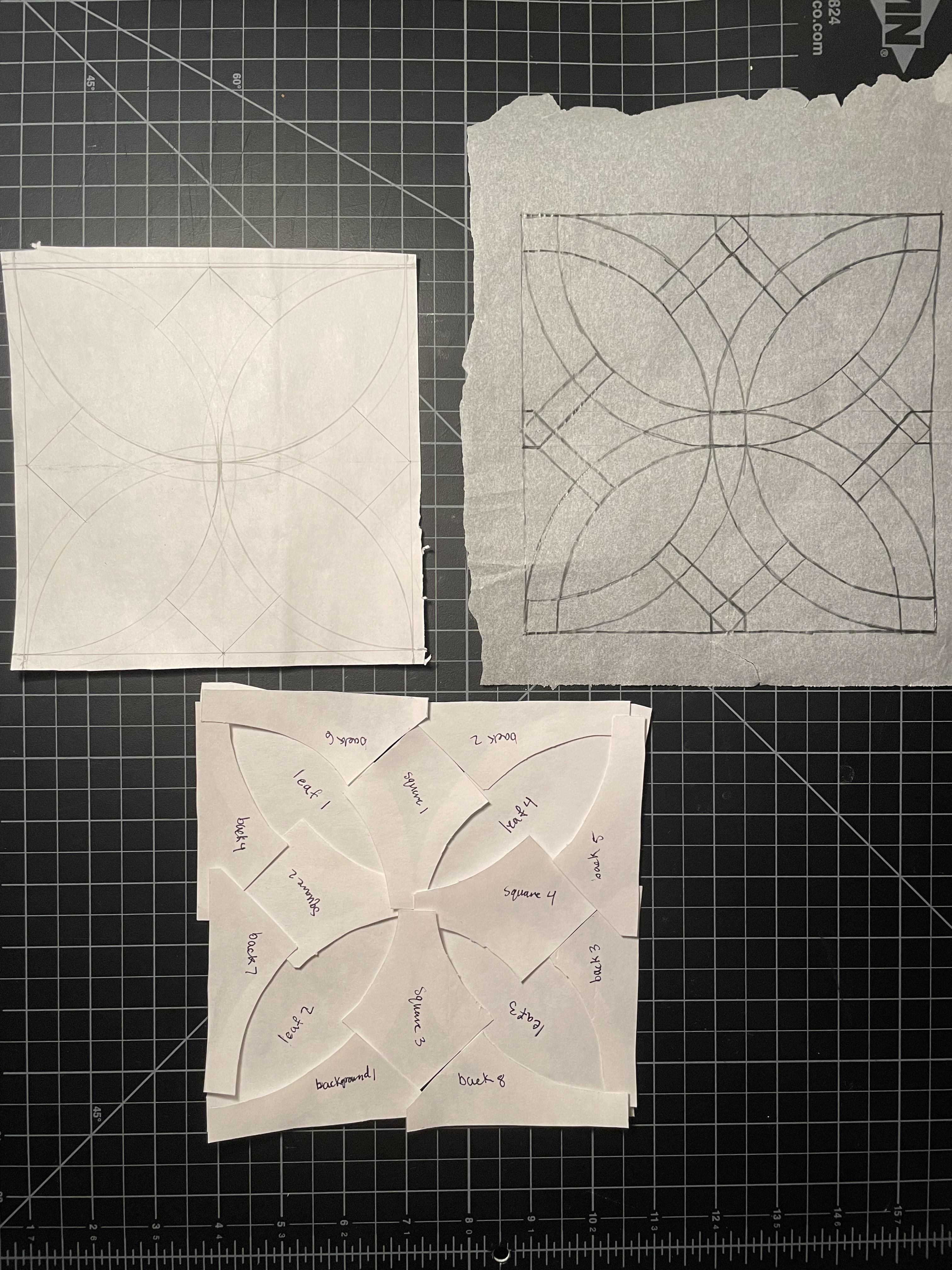
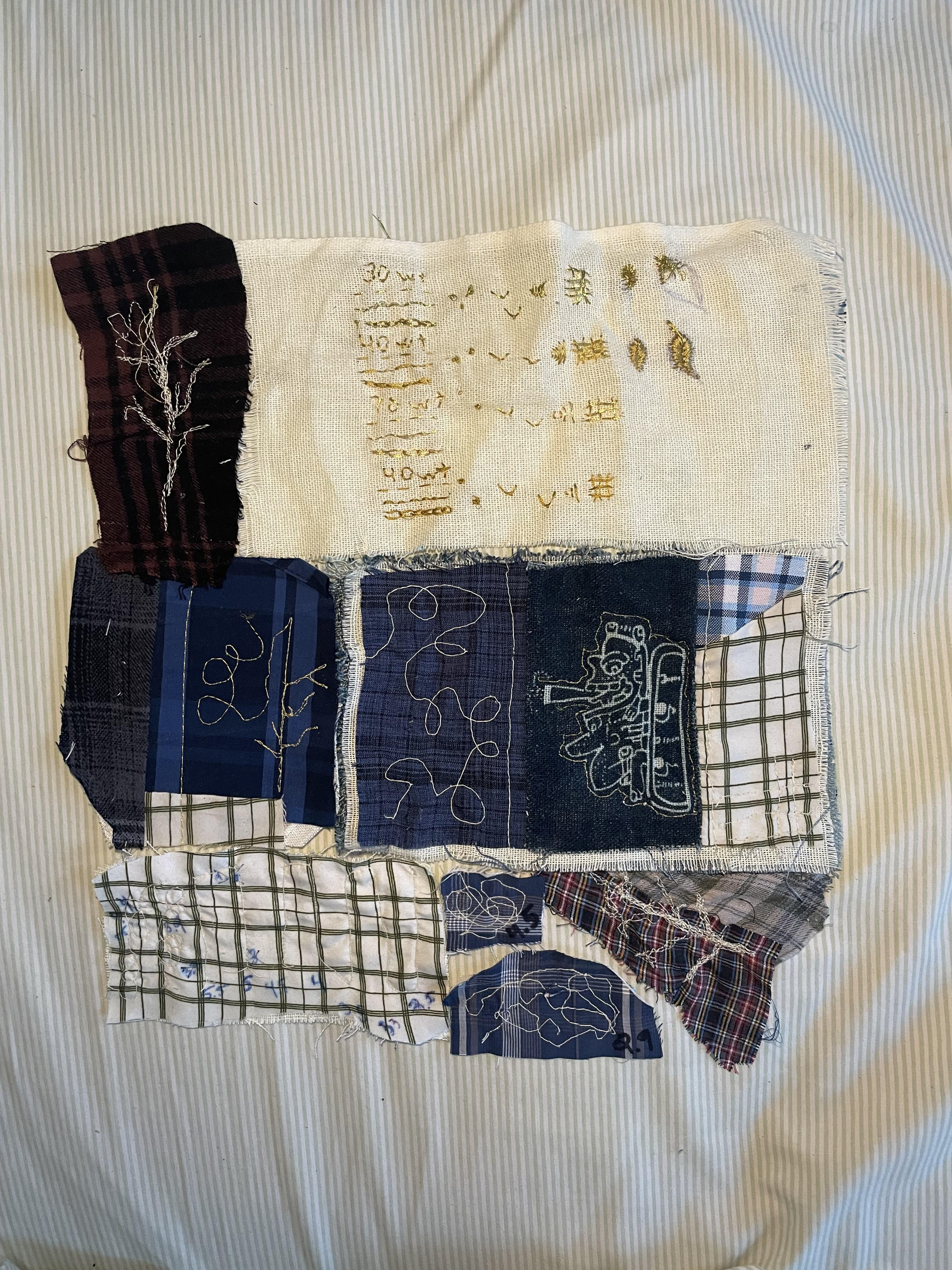
In 2023, my grandfather passed away from a life of smoking cigarettes and his closet of exclusively plaid button-down shirts were passed down to me. Growing up with family members who were addicted to nicotine deeply influenced my negative view on tobacco. Sun-Cured History and Plaid Memories aims to shift my perspective by exploring the history of the tobacco plant and its connections to politics and culture, both in its place of origin, Central America, and in my home region of North Florida and the Piney Woods Belt. Long used by Native Americans for spiritual and recreational purposes, tobacco, often referred to as ‘brown gold,’ became a key motivator for European colonization in the Americas. This demand has been supplied by centuries of slave labor and exploitation of vulnerable communities. Historical images sourced from local and national archives illustrate the role of southern companies like Swisher International, where my great grandmother worked, in shaping this narrative. These images are developed onto cloth used to cover ‘shade tobacco,’ grown in the region, then toned with four types of locally grown tobacco and embellished with gold embroidery. Alongside these visuals, I repurpose my grandfather’s 27 plaid shirts into quilt squares historically rooted in the southern US, depicting motifs of tobacco leaves, industry, and agriculture.
Fall Semester Research and Development
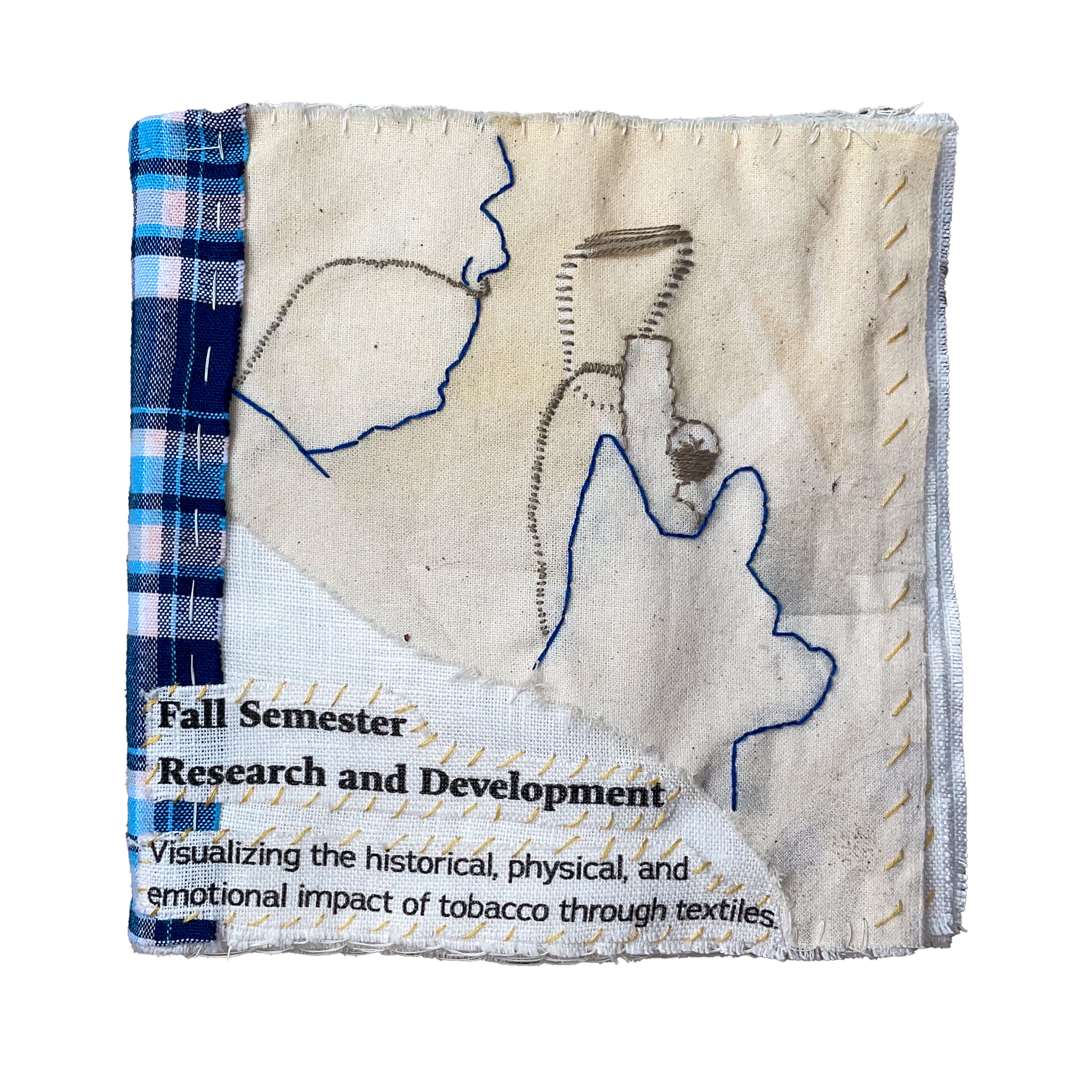
Documenting work for the fall semester of my senior thesis.
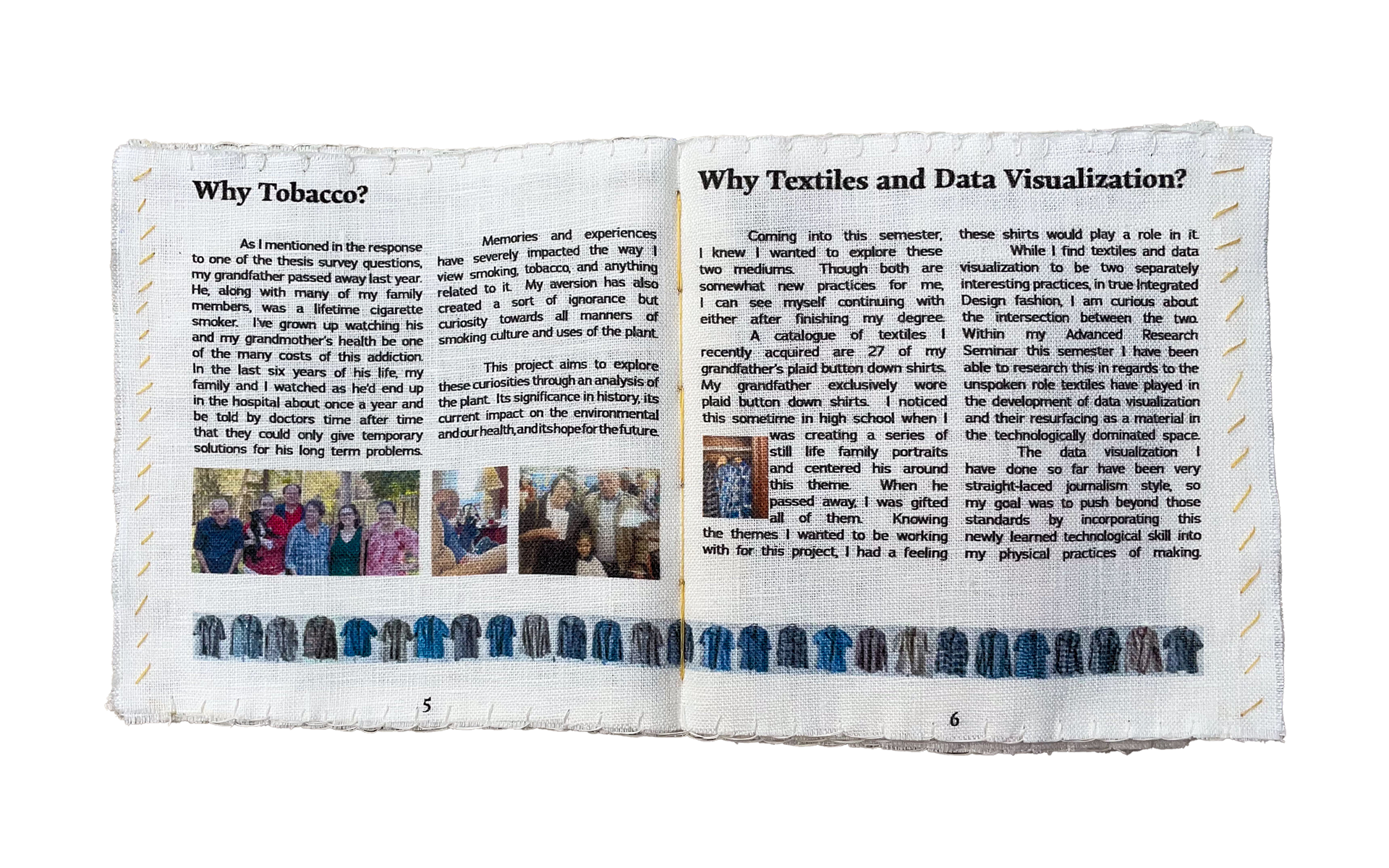
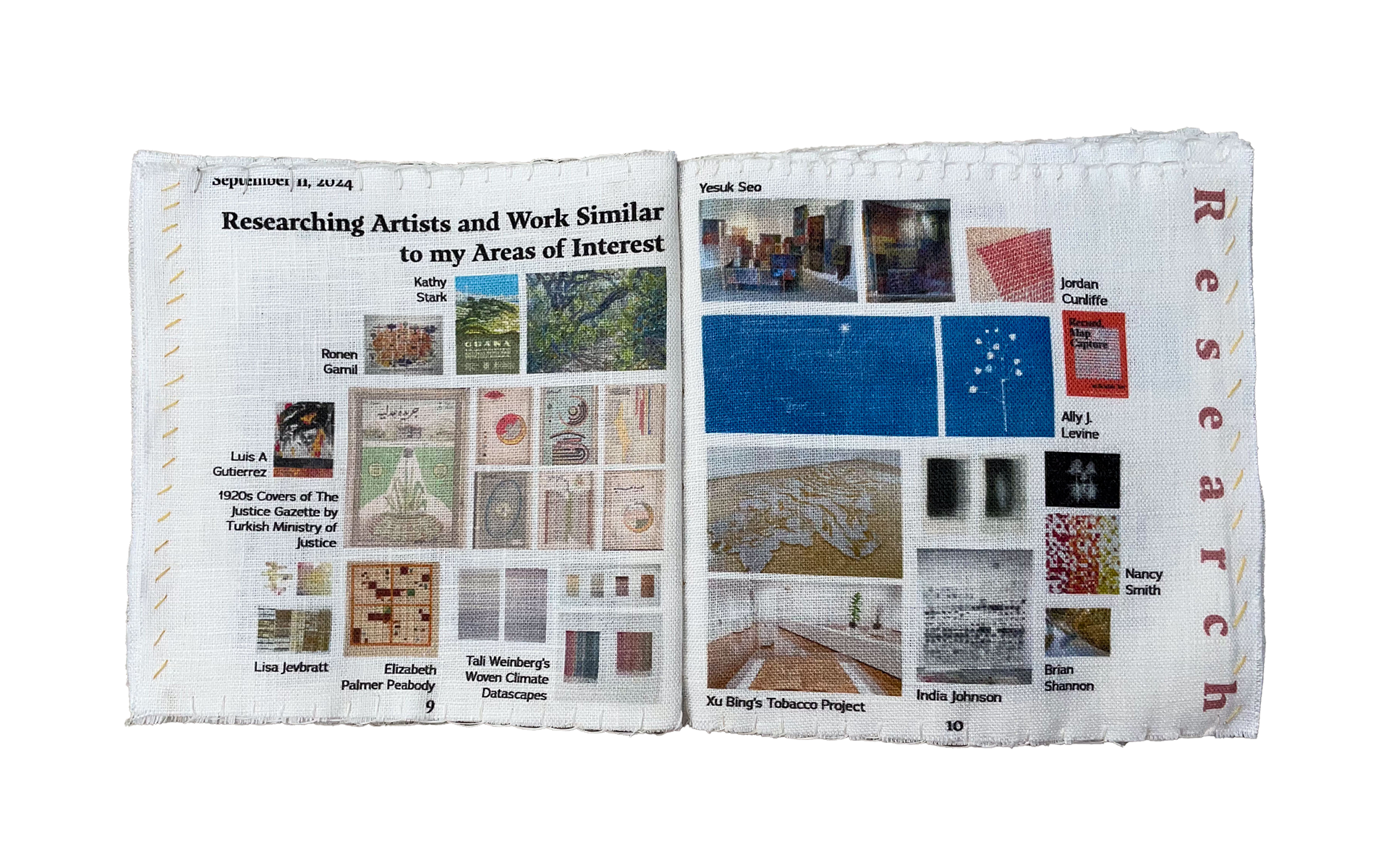
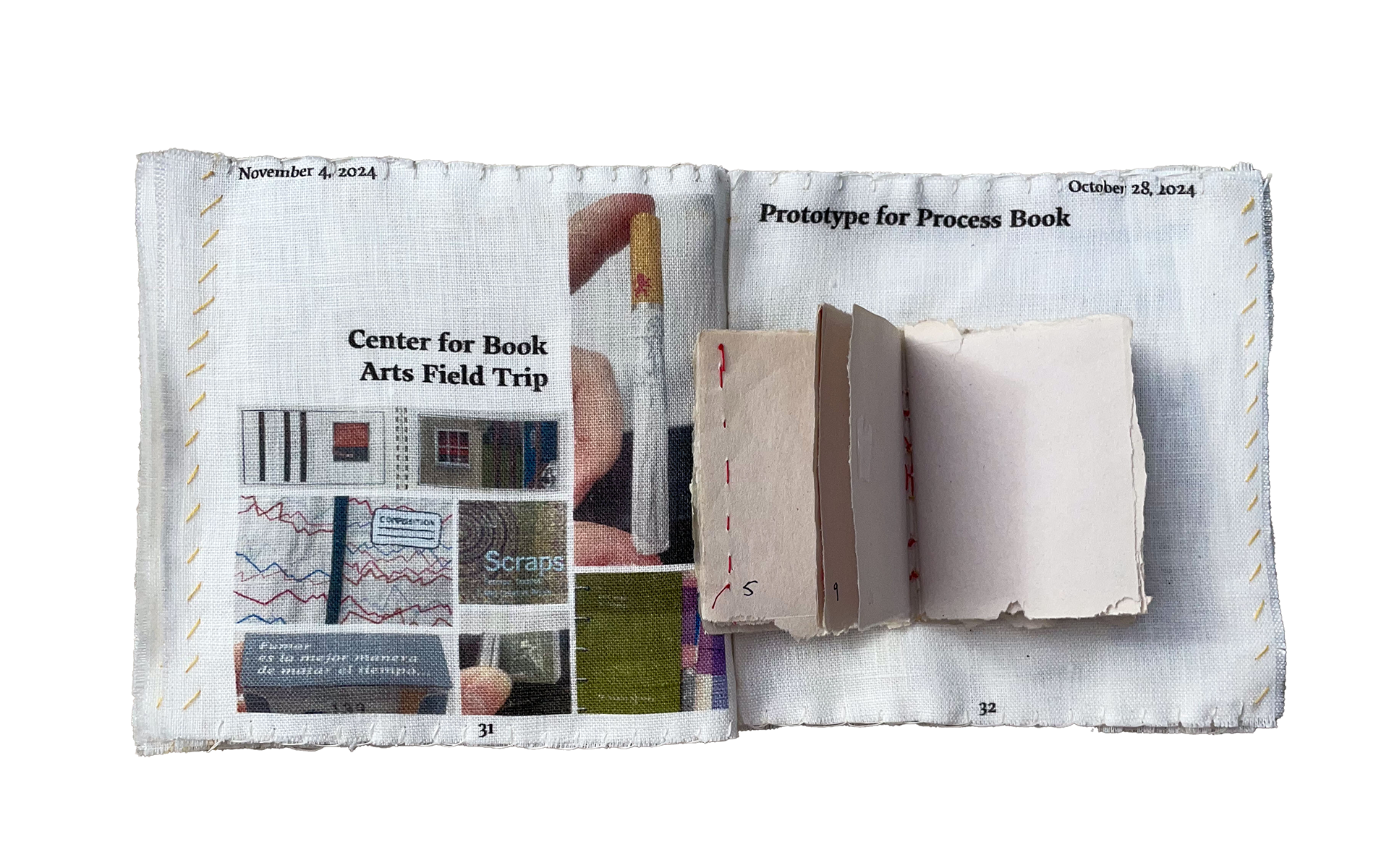
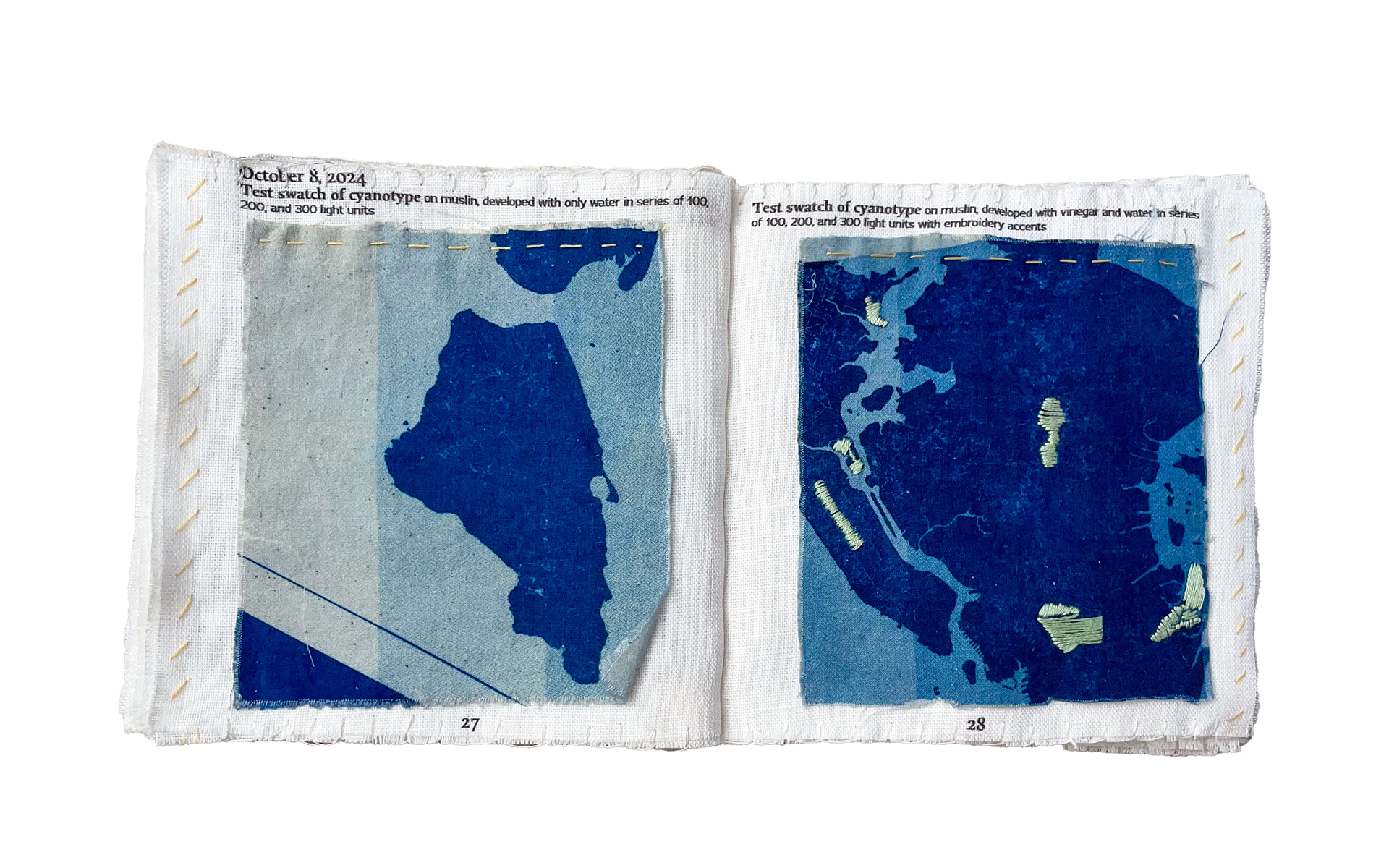
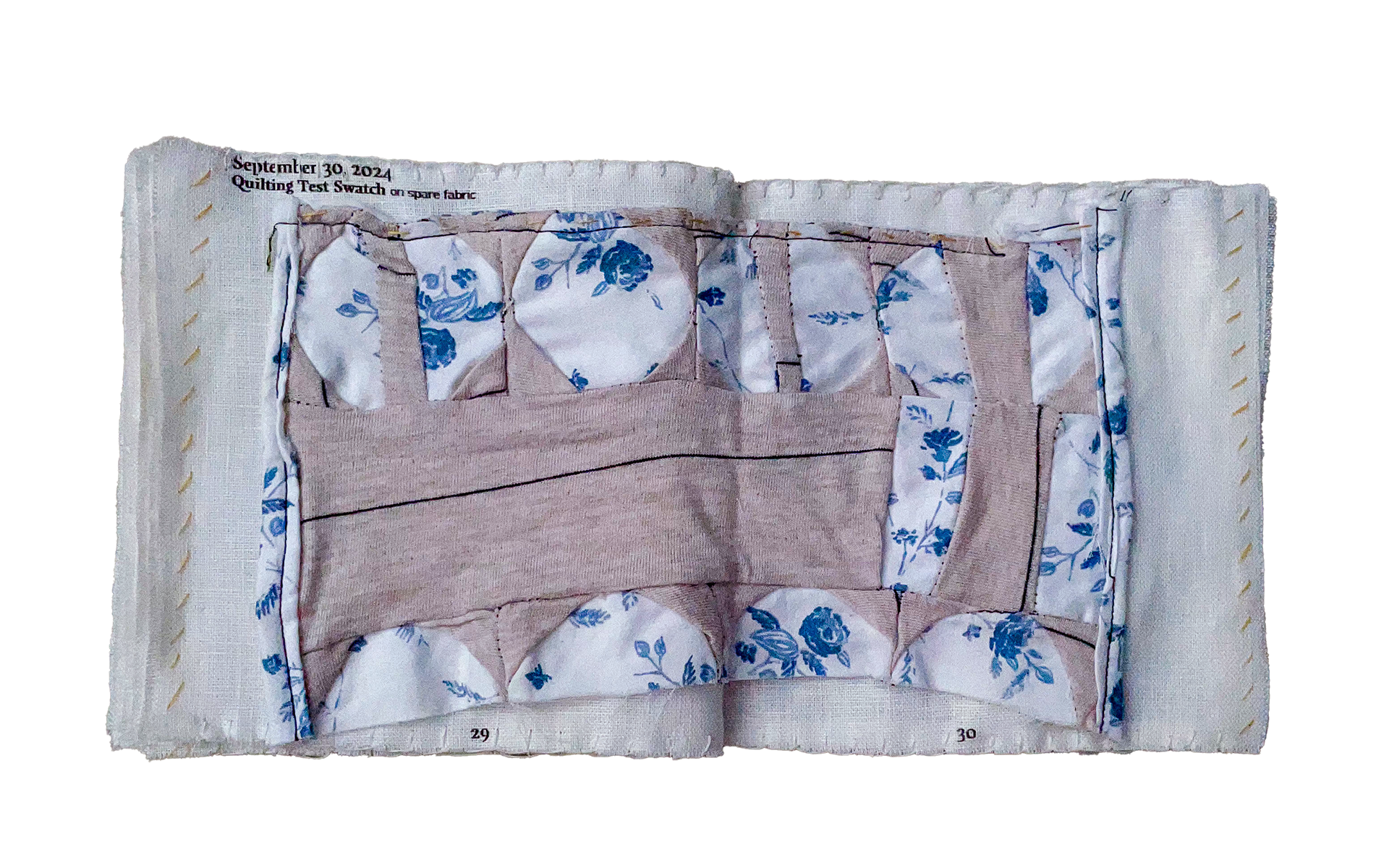
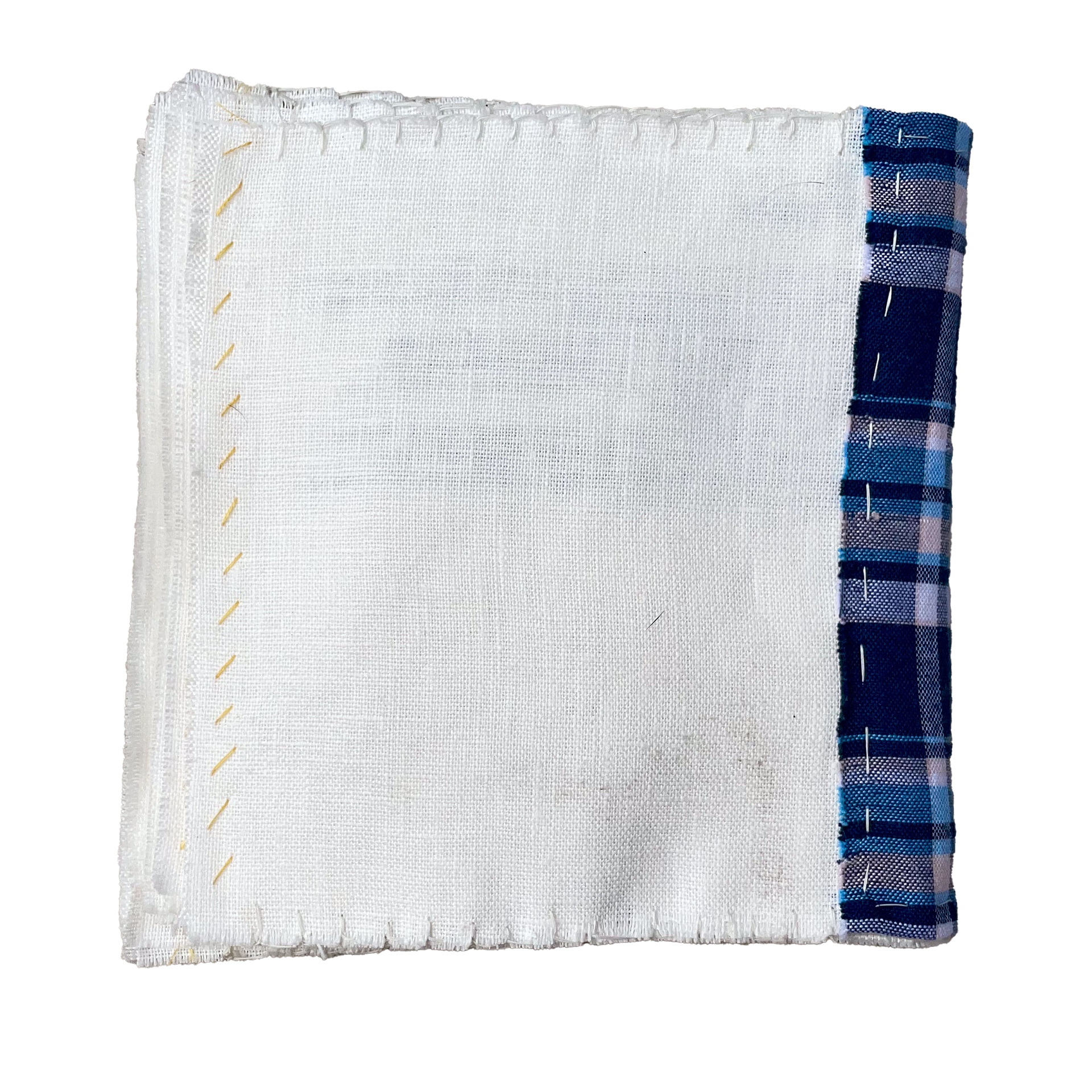
To prepare for my senior thesis project, I spent the majority of my fall semester researching, studying, planning, and prototyping concepts. I then documented this process within a process book which I translated to be printed on linen textile. This was then cut and hand-sewn together into a binded book with a piece of my grandfather's shirt used to cover the raw binded spine. Along with my written research and imagery from the many field trips to museums, the book included embroidery, quilting, and cyanotype samples from throughout the semester.
Antifungal Fabric Plant Pot
Experimenting with Propolis in Material Fabrication
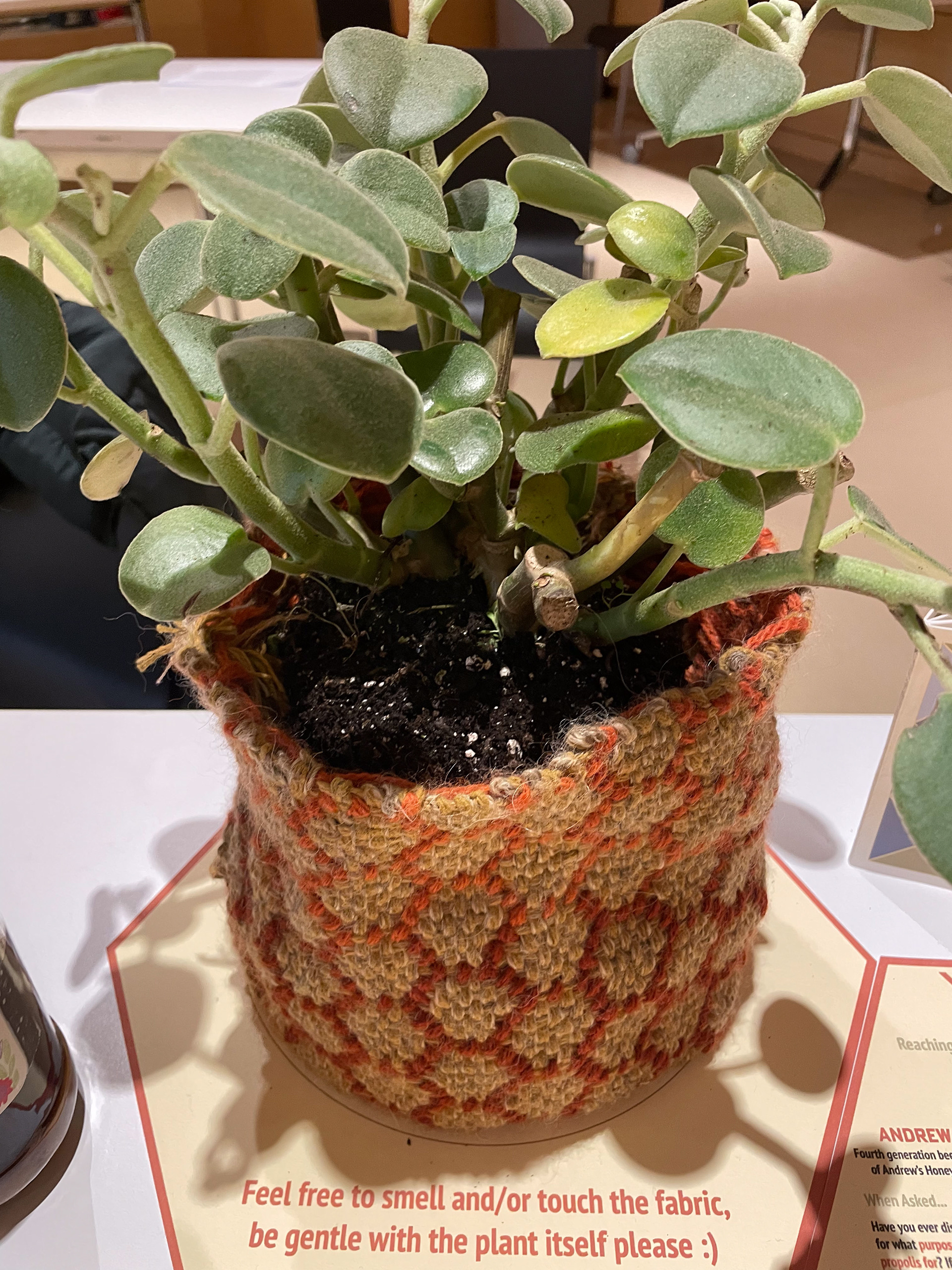
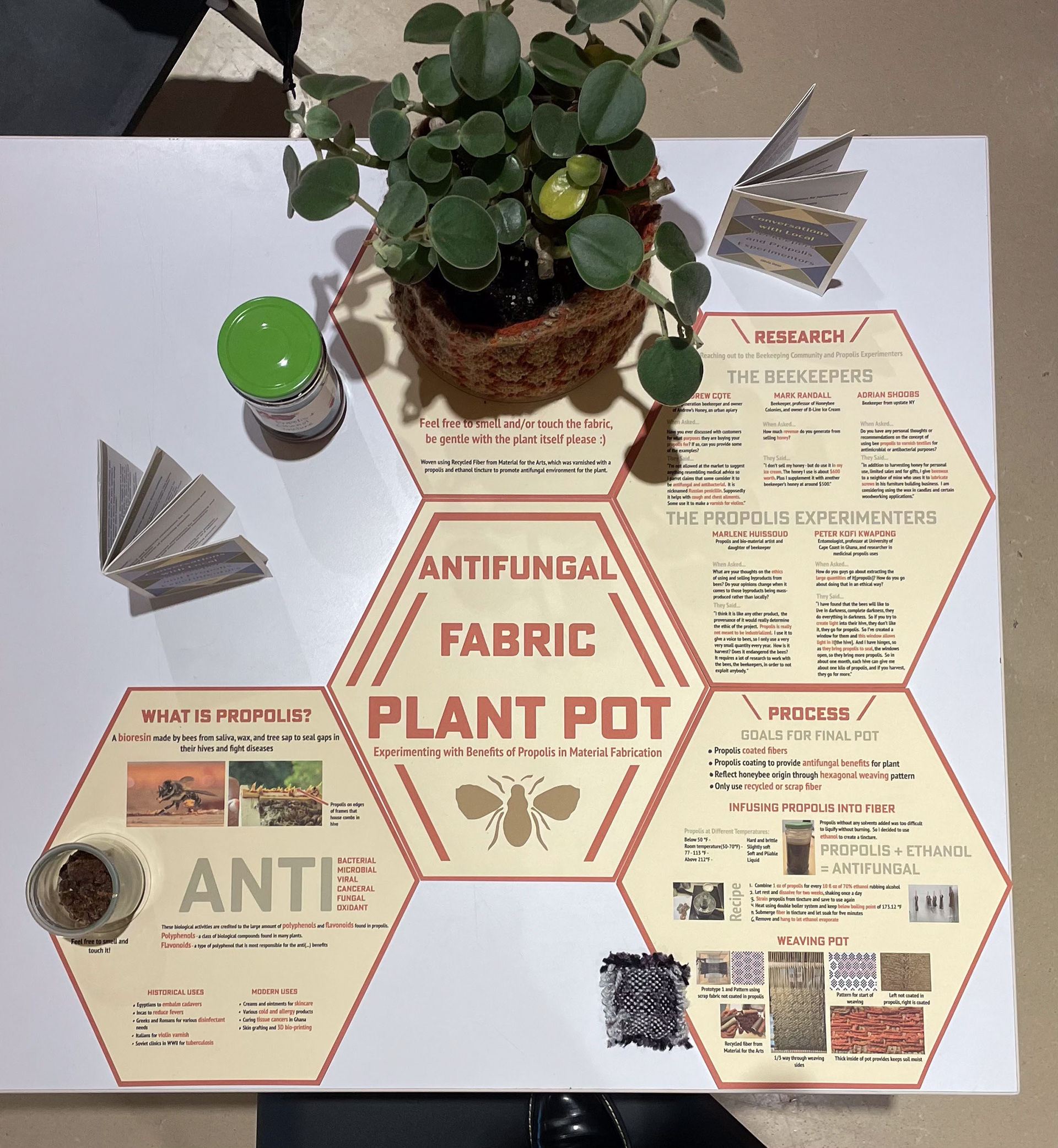
In my junior year of my Integrated Design program I studied the potential benefits of propolis through the fabrication of a fabric plant pot. Propolis is a byproduct that honeybees create as glue for their hives. When honey is harvested by beekeepers, they often will harvest some of the propolis as well. Propolis has been found to have varying anti-bacterial and anti-oxidant effects on human health. I was introduced to propolis through another course I took junior year called Honeybee Colonies where we studied the entymolygy of honeybees and culture and history of beekeeping.
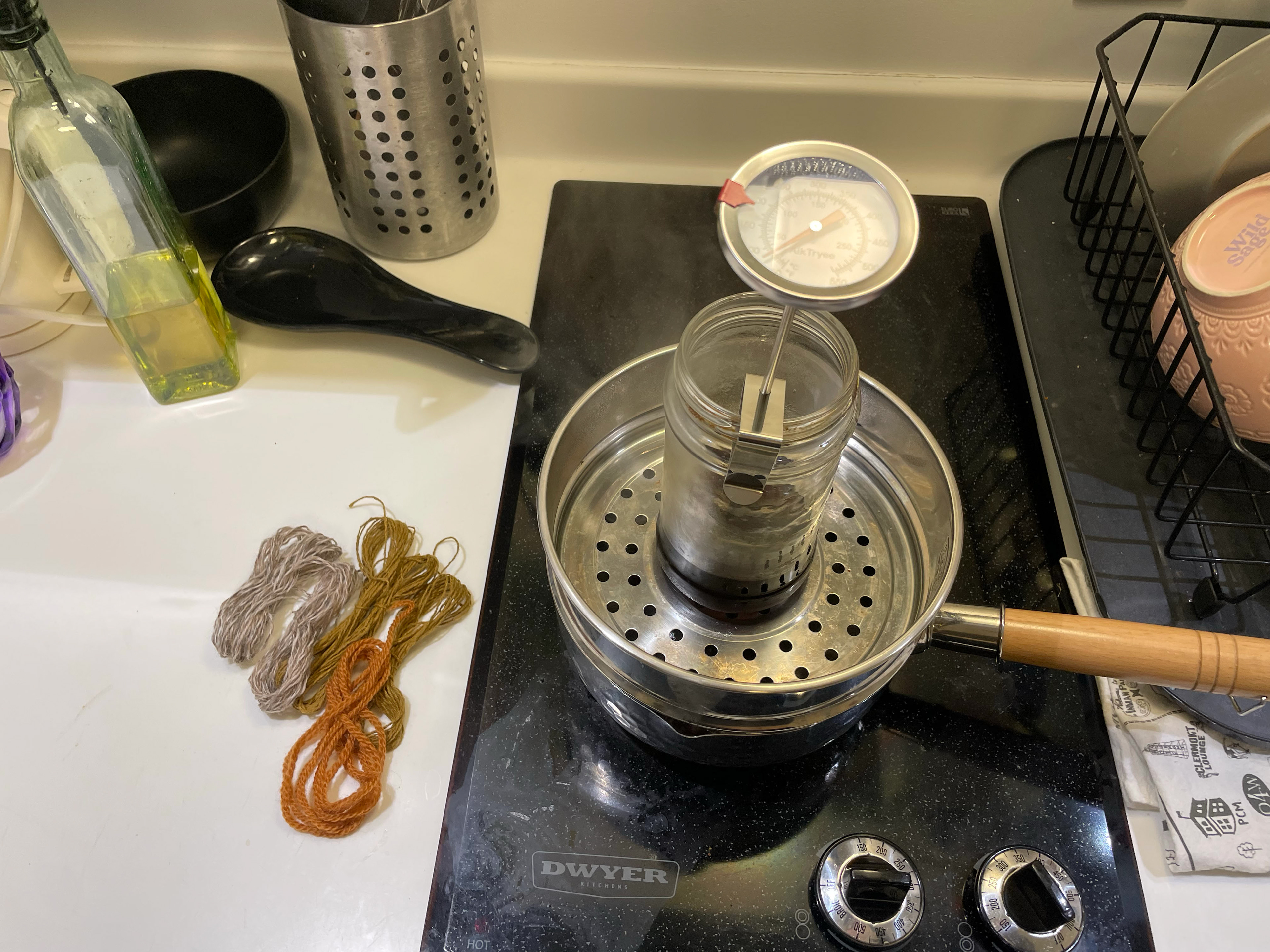
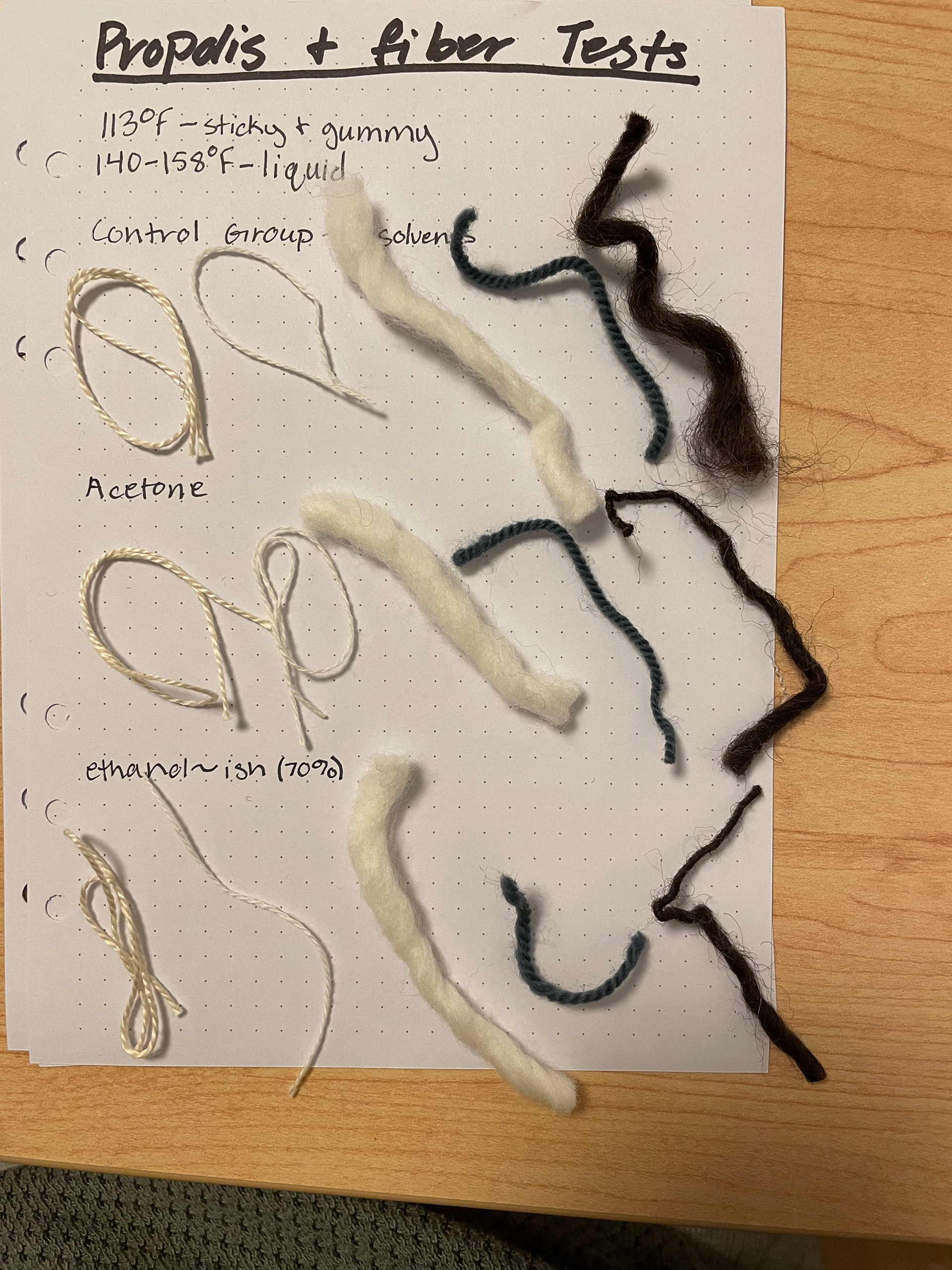
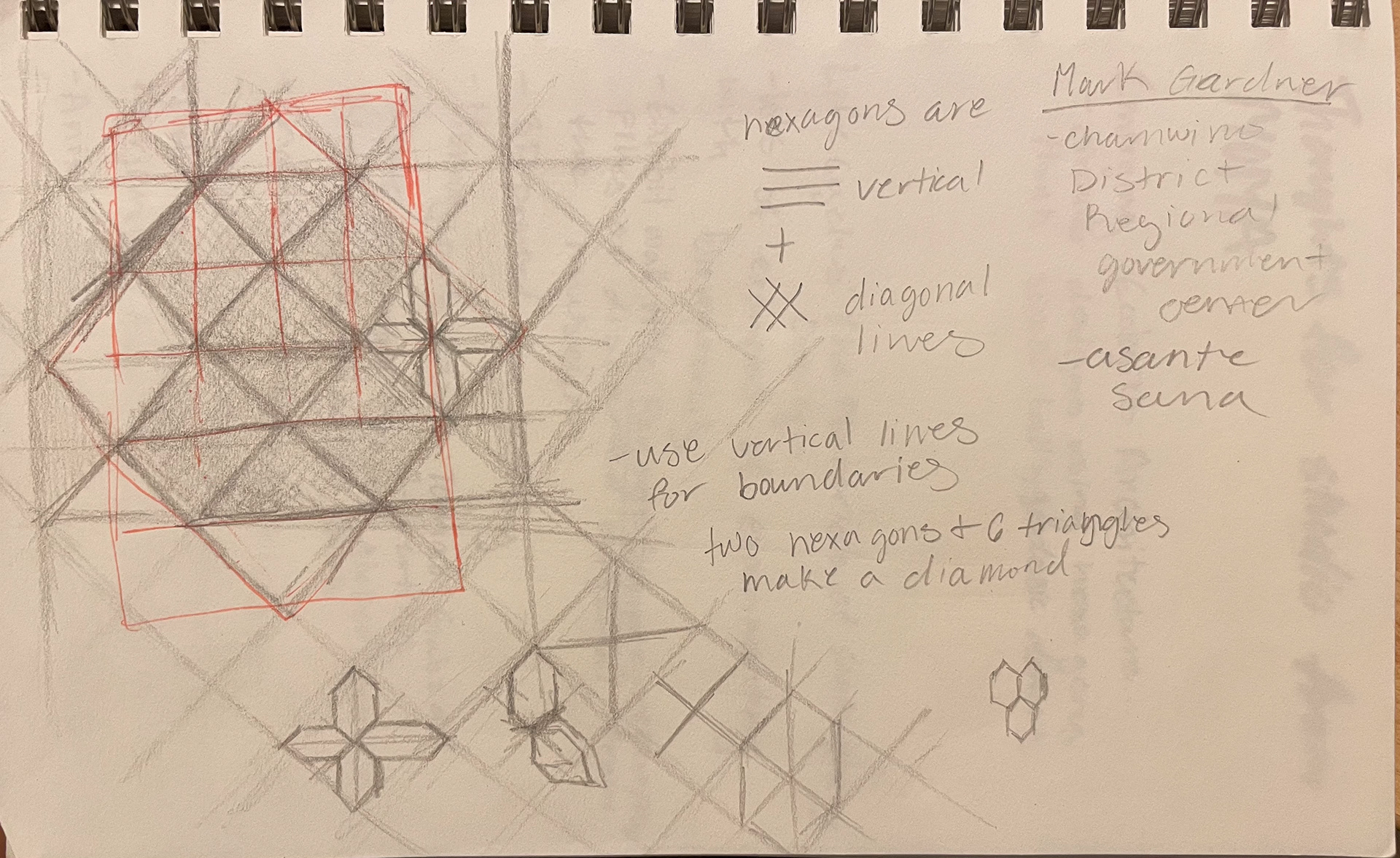
The idea to create a plant pot with fibers soaked in propolis came from my inability to keep house plants alive. They always end up getting root rot. I wondered if there was any benefit to housing a plant in a propolis infused environment. I created a propolis solvent by melting it in heated ethanol, then soaked recycled fibers in the solvent. Then I hand wove the fibers in a honeycomb inspired pattern. For the presentation of my project, I created themed posters to document my research and creation. I was inspired by historical honey packaging and Constructivist graphic styles.
The idea to create a plant pot with fibers soaked in propolis came from my inability to keep house plants alive. They always end up getting root rot. I wondered if there was any benefit to housing a plant in a propolis infused environment. I created a propolis solvent by melting it in heated ethanol, then soaked recycled fibers in the solvent. Then I hand wove the fibers in a honeycomb inspired pattern. For the presentation of my project, I created themed posters to document my research and creation. I was inspired by historical honey packaging and Constructivist graphic styles.
Plaid Rug
Designing a plaid textile inspired by my grandfather
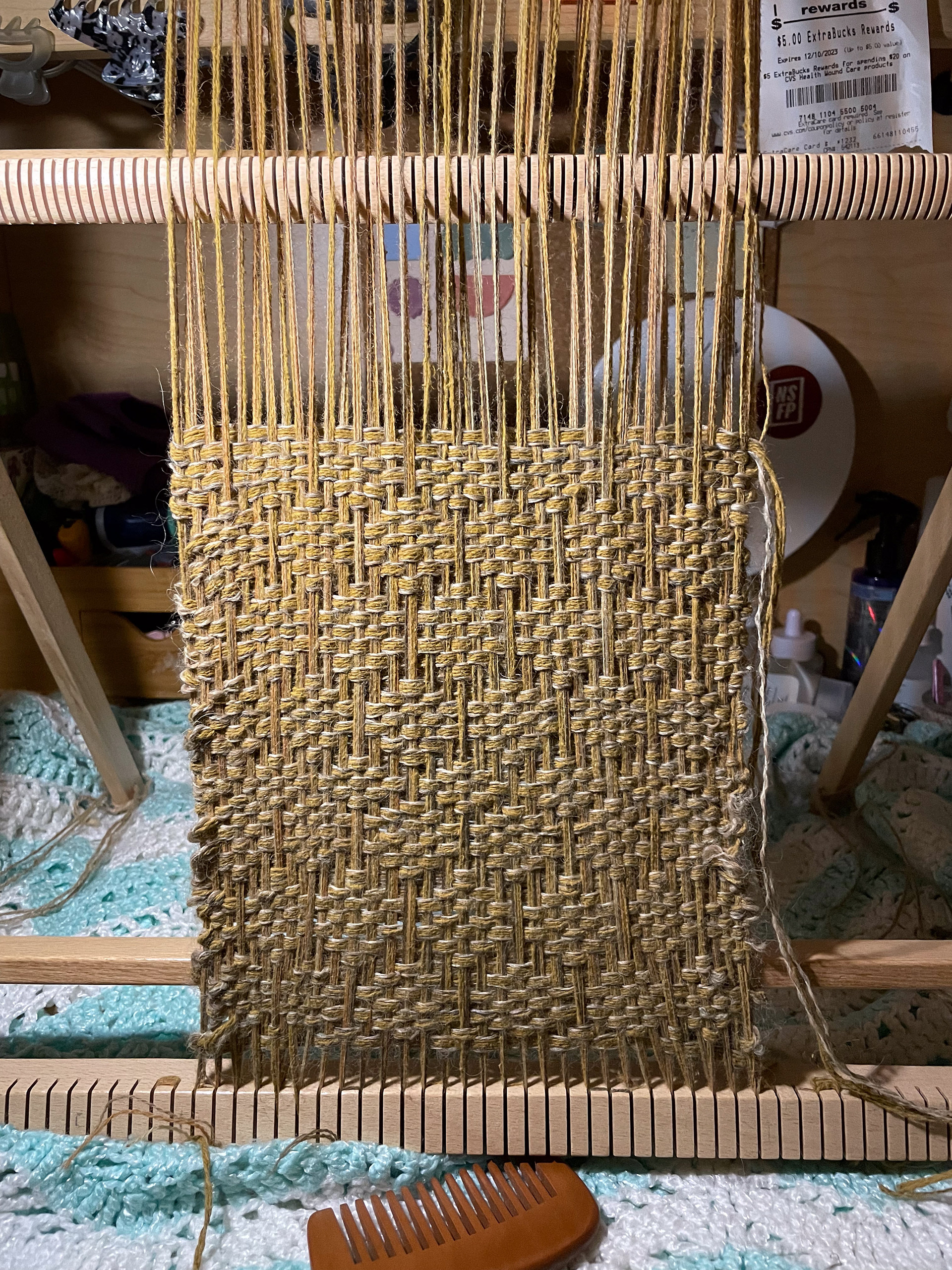
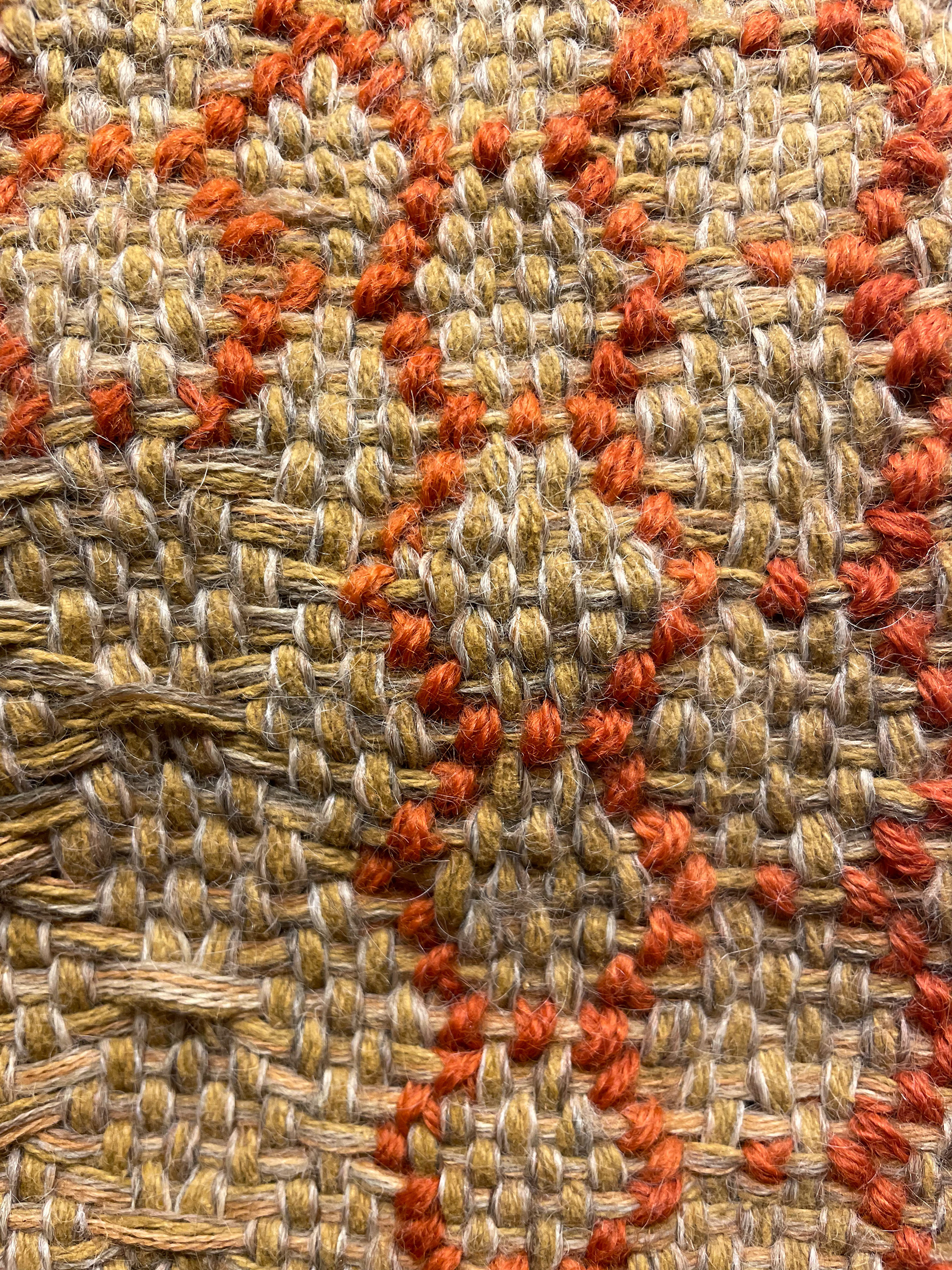
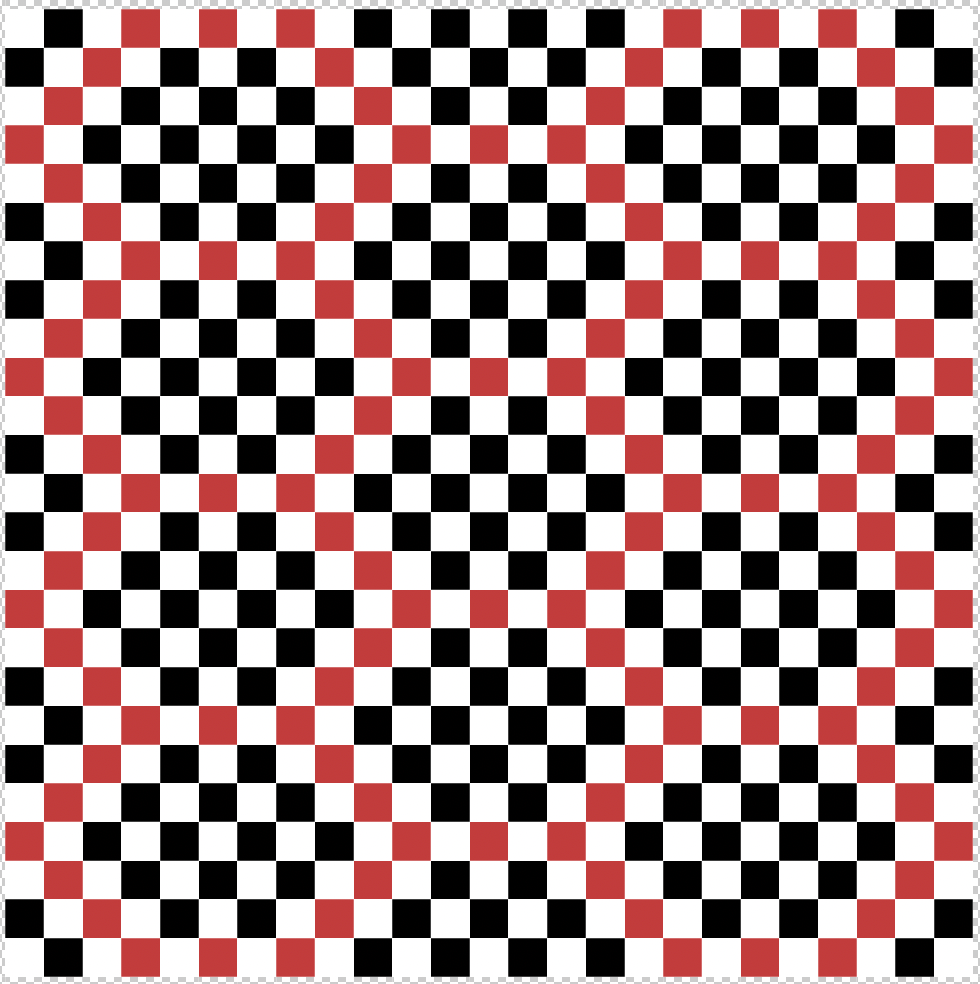
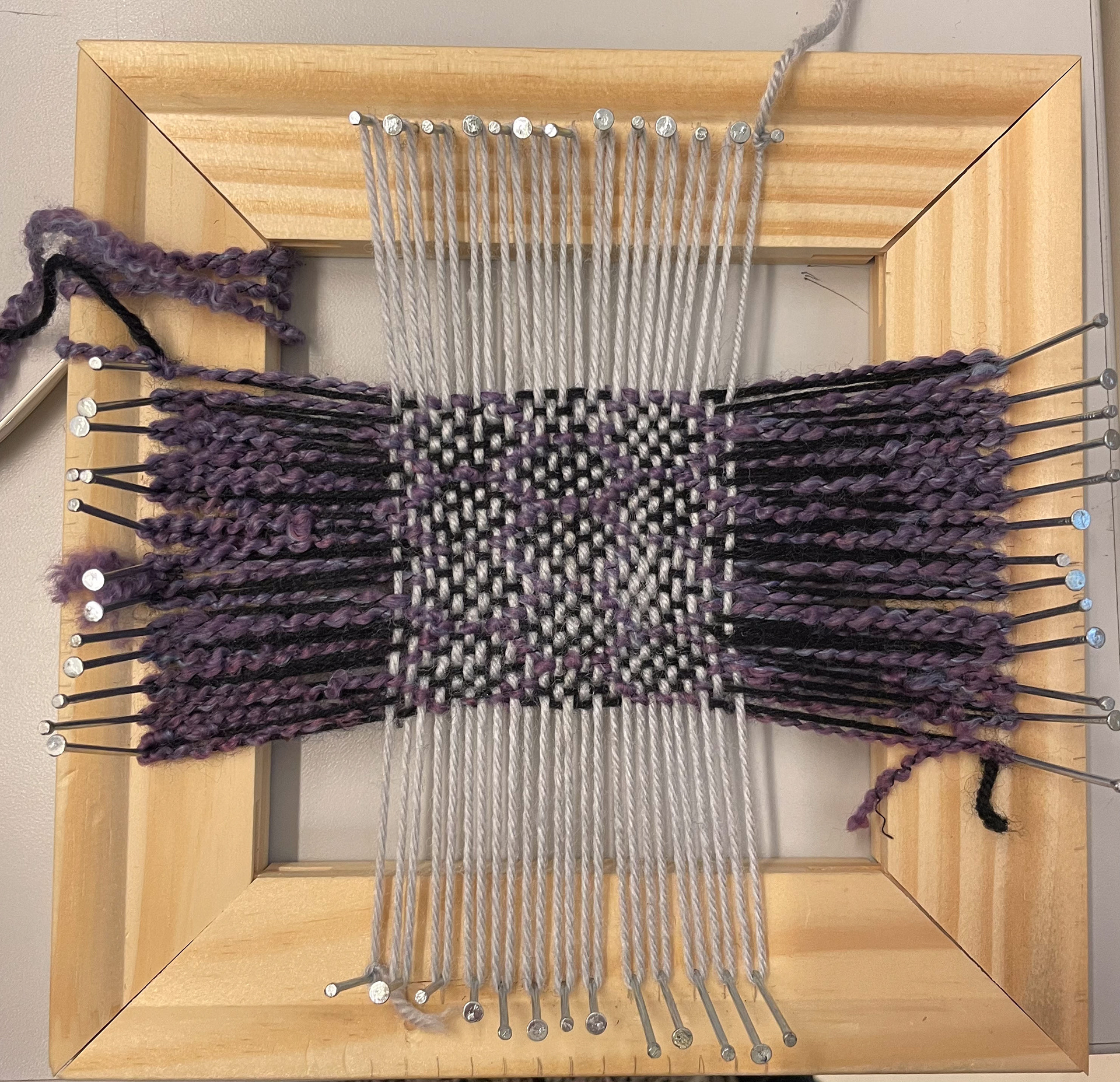
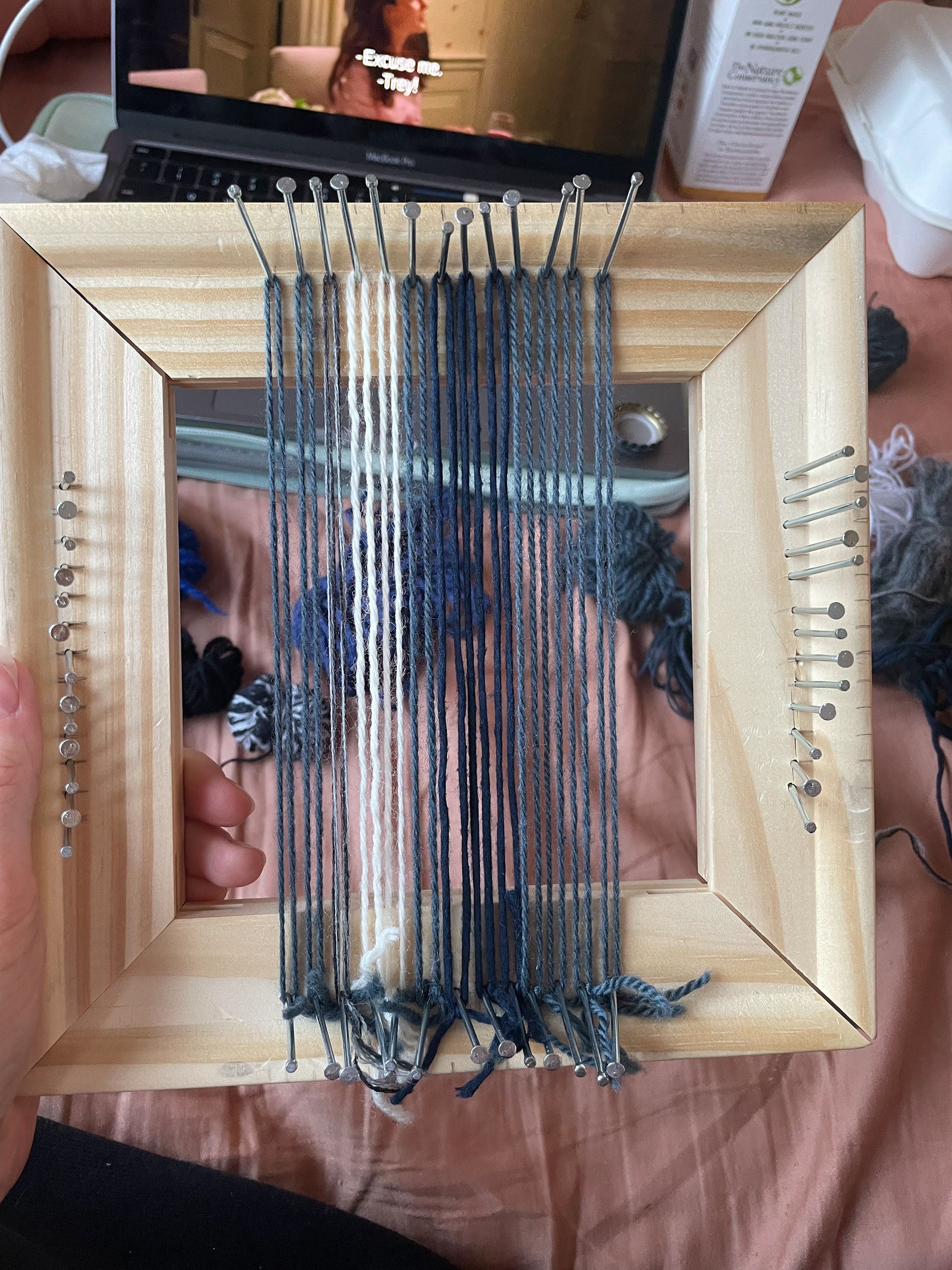
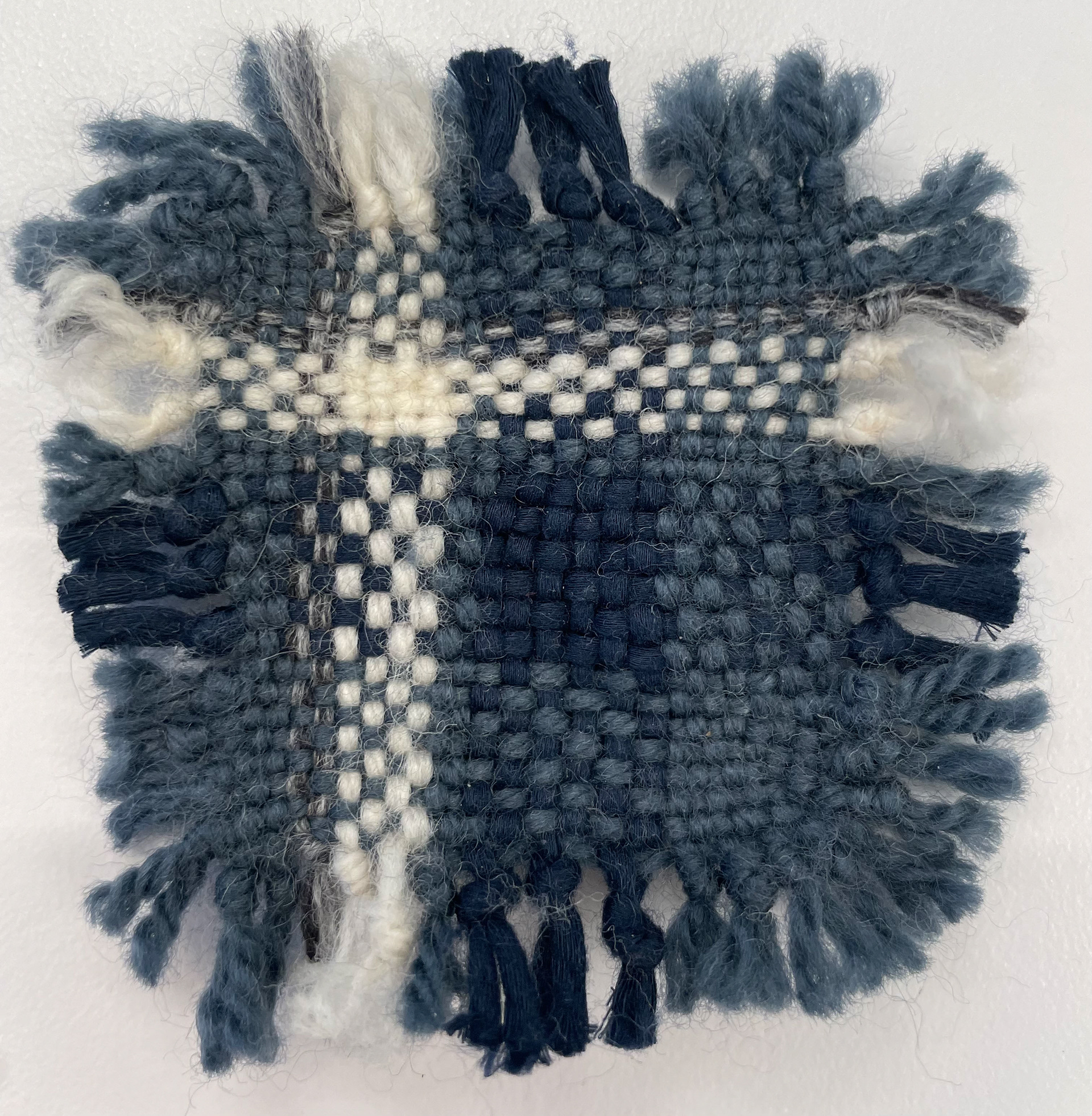
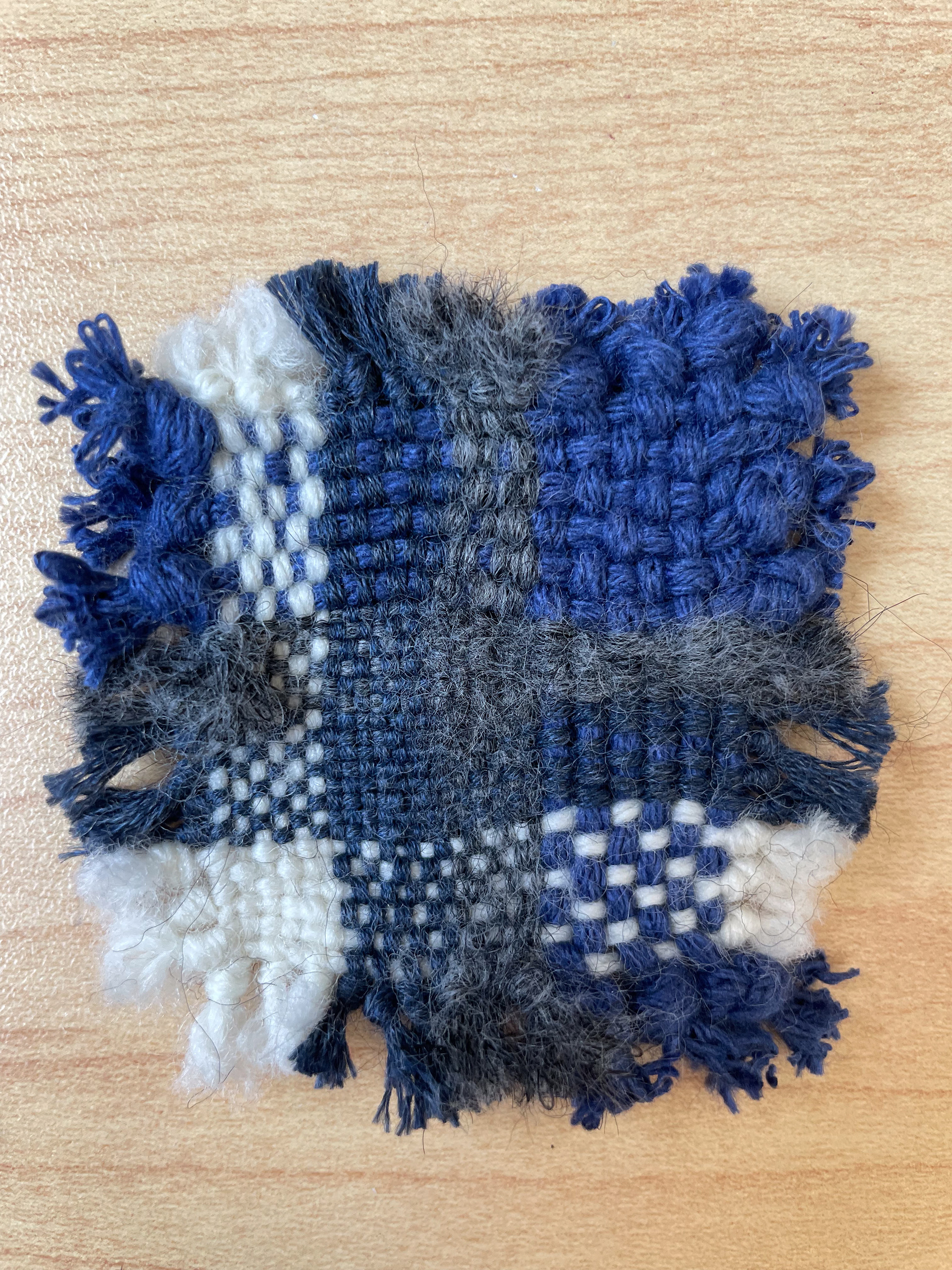
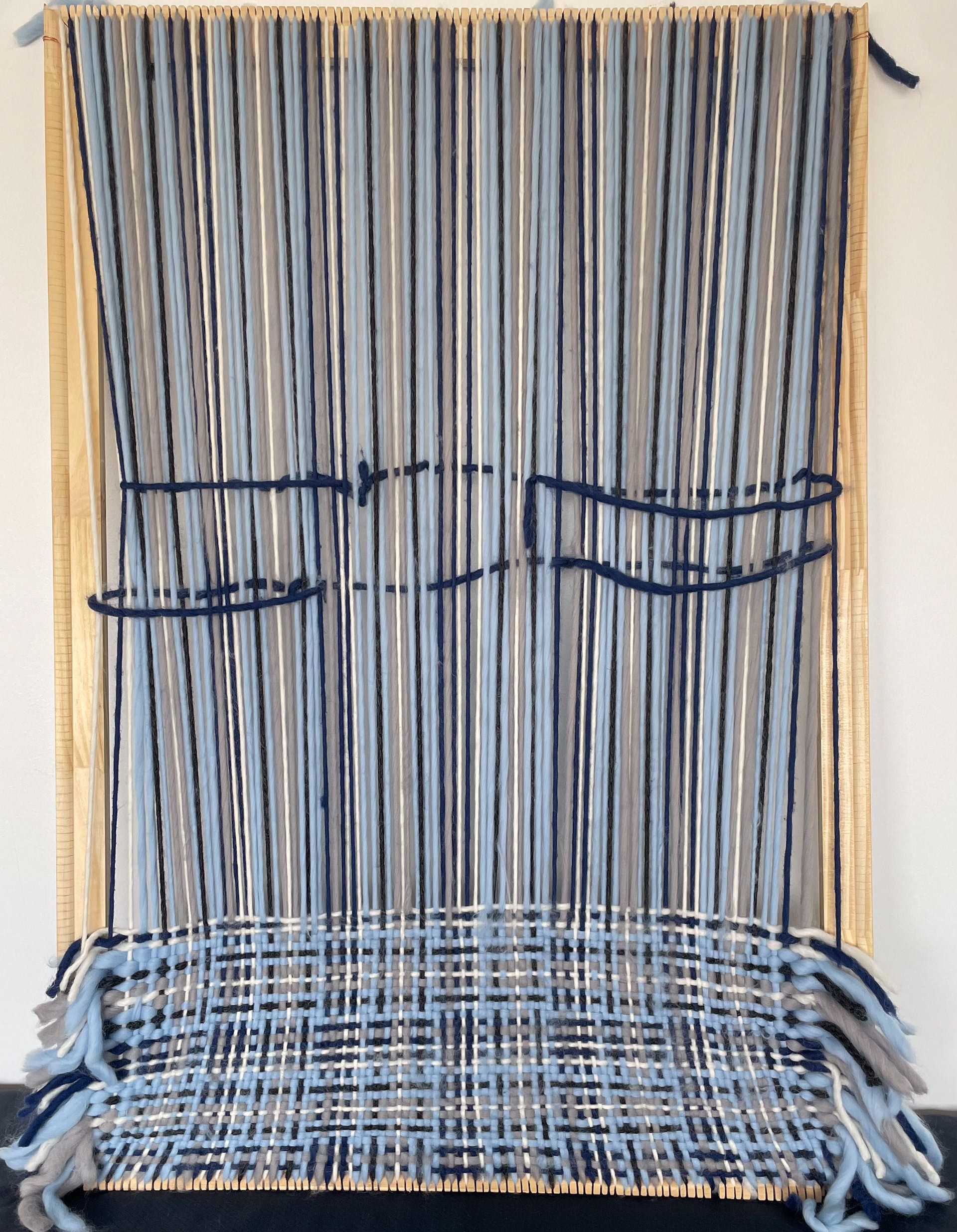
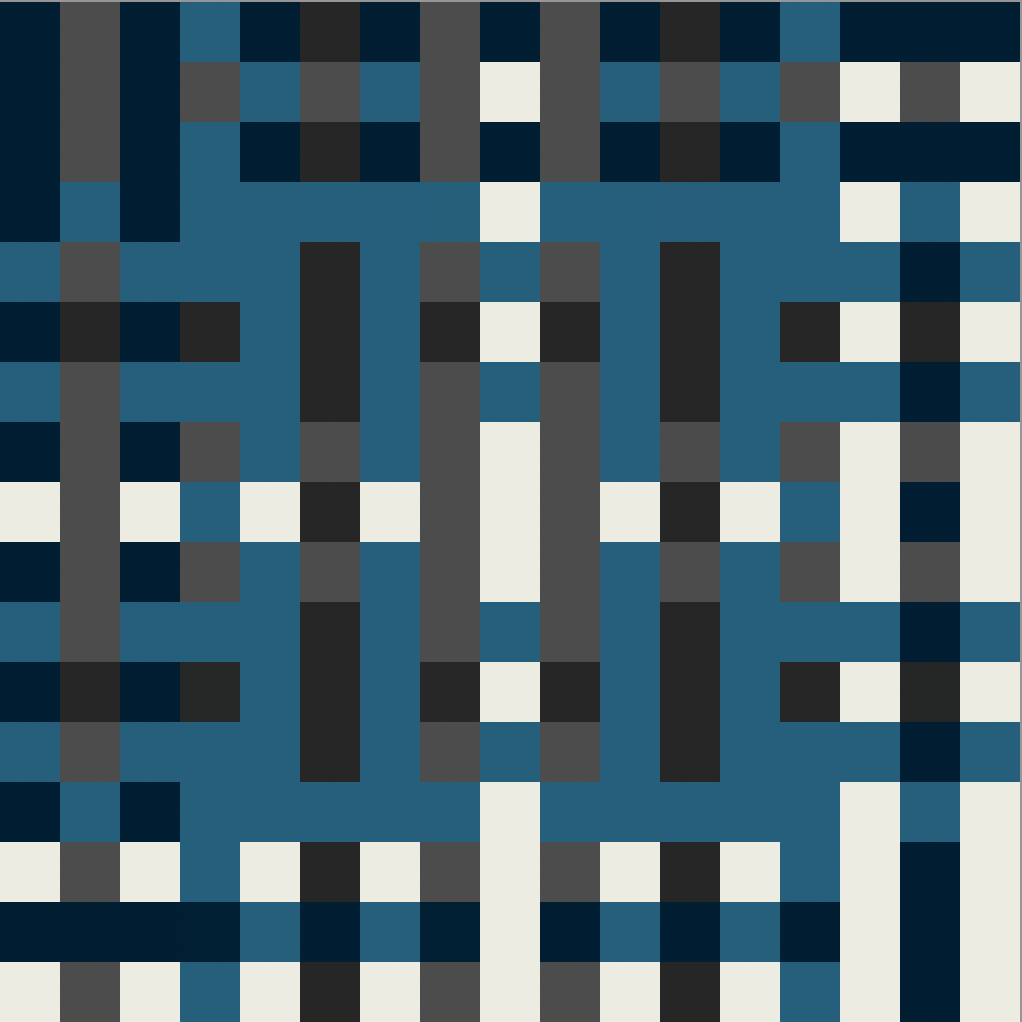
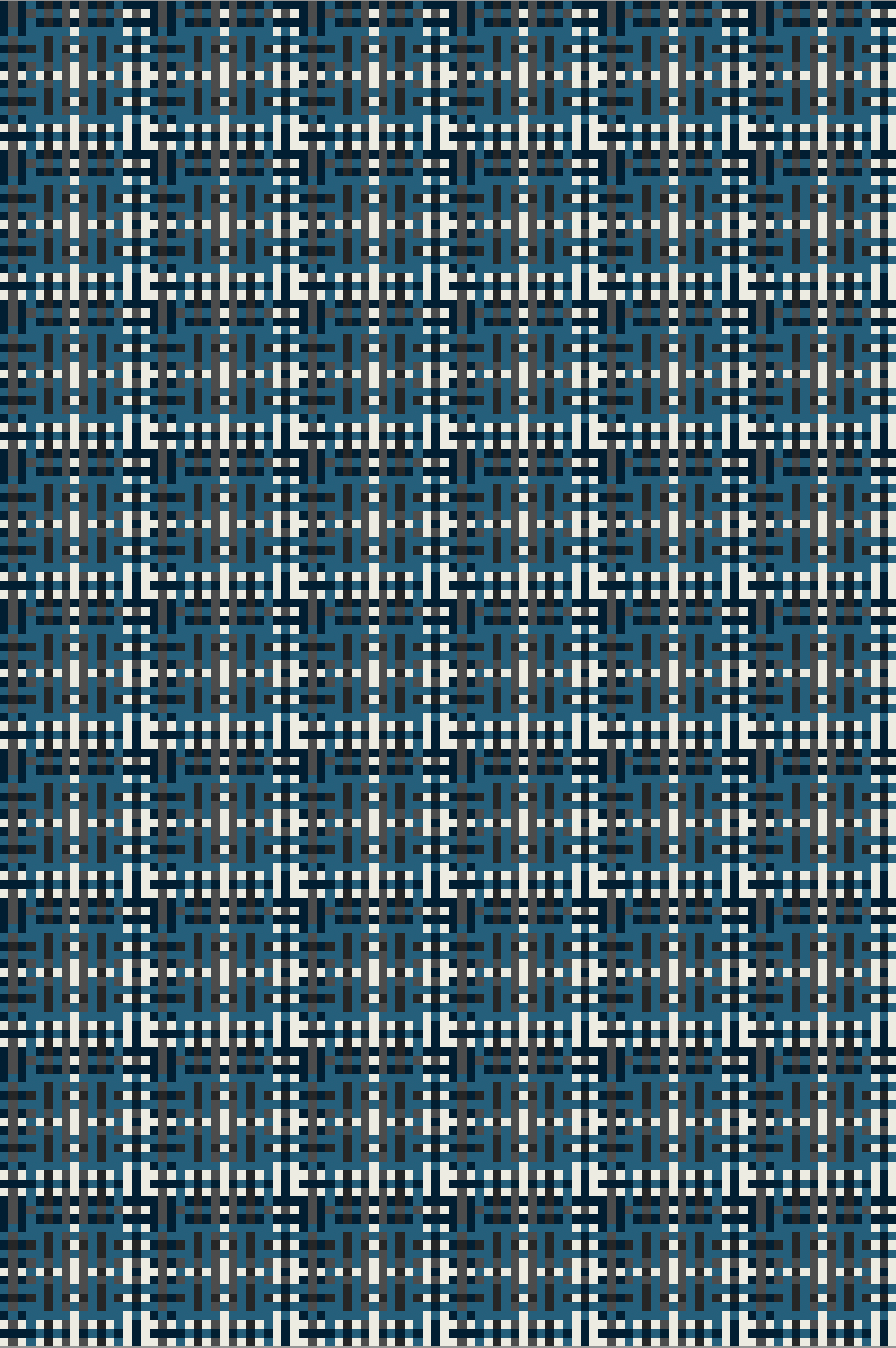
In sophomore year I took a course called Intro to Fashion Studies. This course taught me about the psychology and politics involved in fashion. As my final project for this course I wrote a paper on the historical and societal significance of plaid flannel textiles. This research inspired me to design my own plaid rug, inspired by the plaids I grew up seeing my grandfather wear. To do so I created CAD drawings using Adobe Illustrator and Photoshop to design multiple variations of plaids. Then went on to weave small-scale swatches using recycled fibers and finally build a large loom to weave my final product.
Crochet Mittens
Designing and crocheting in my spare time
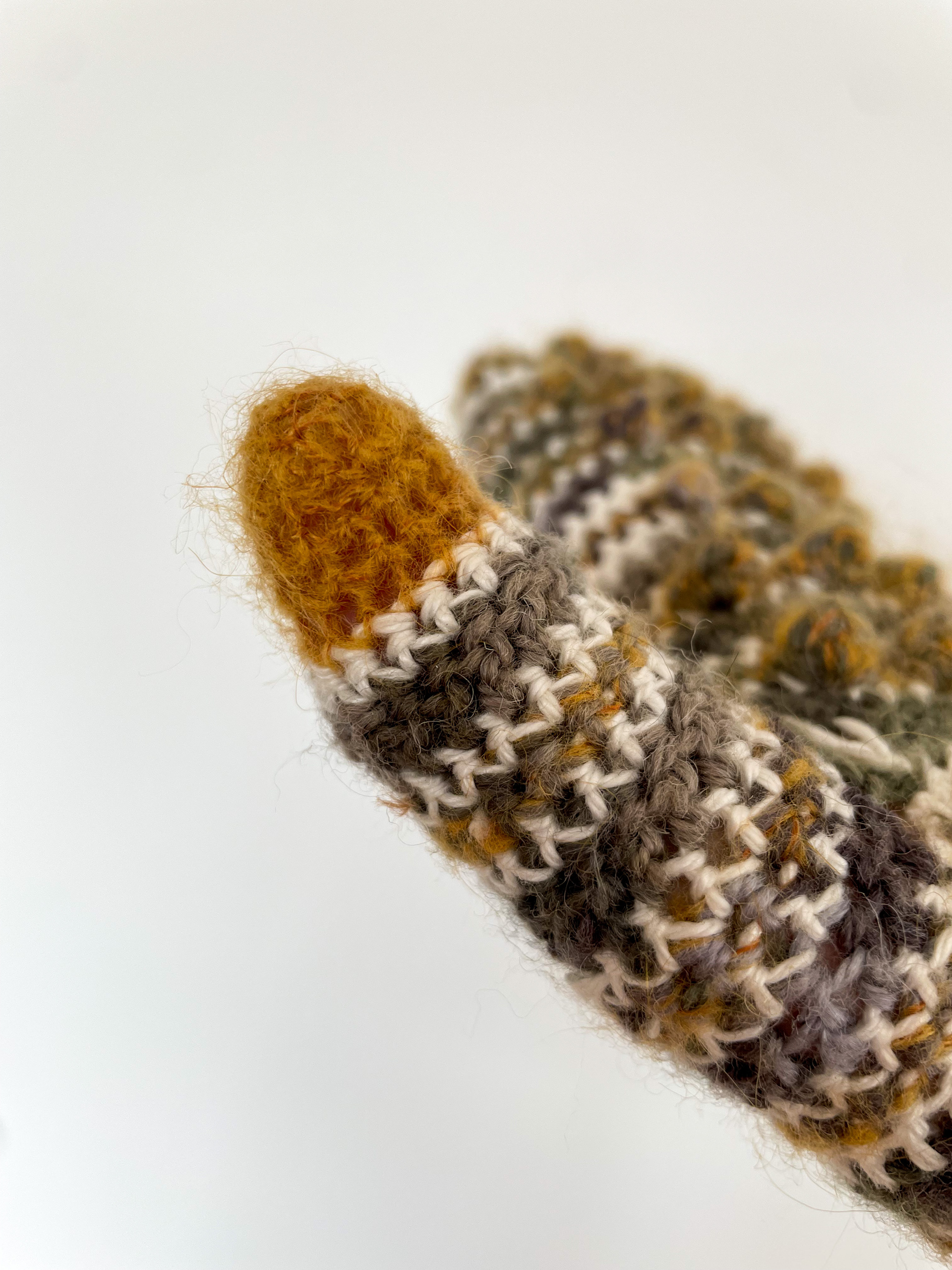
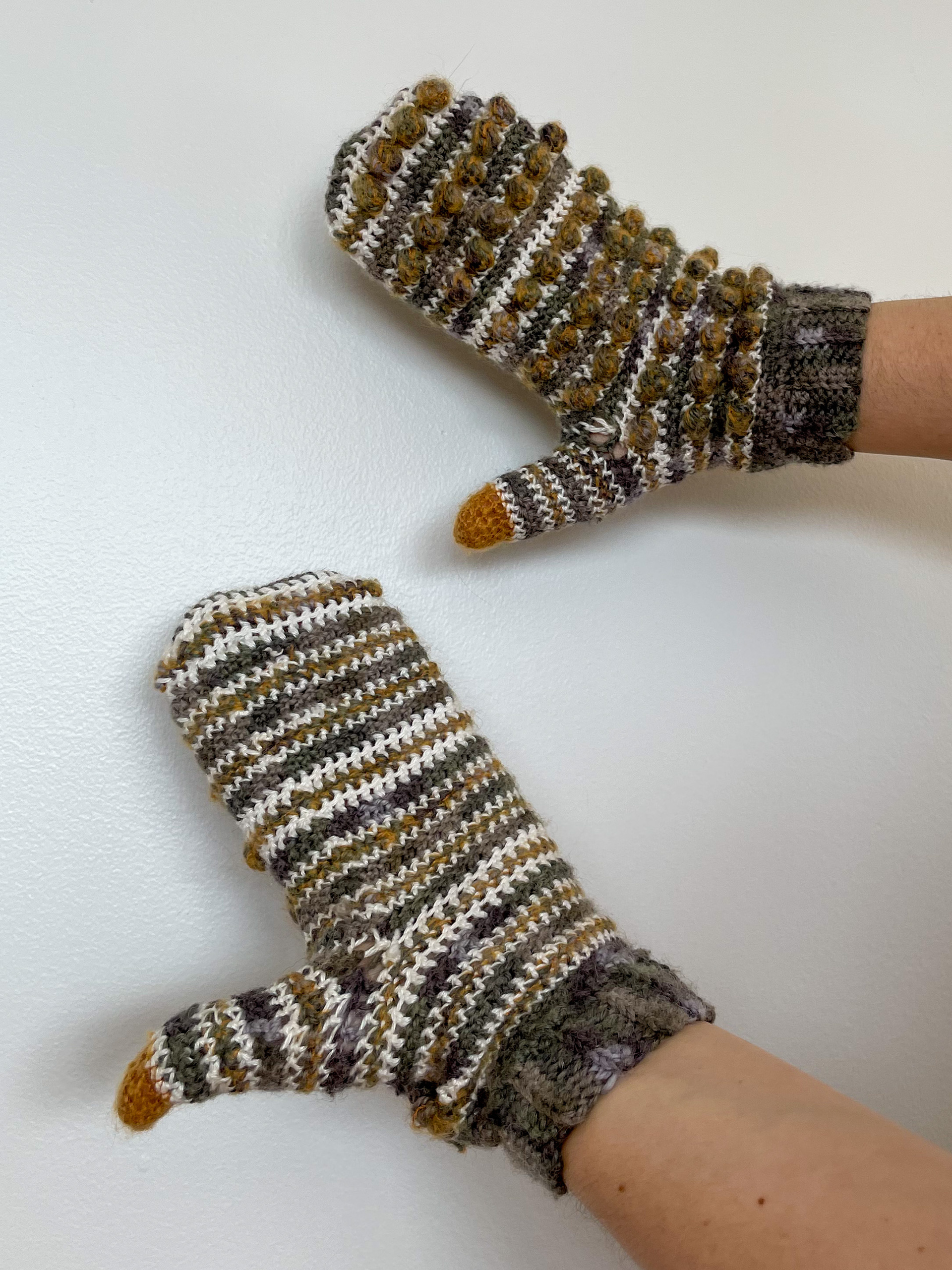
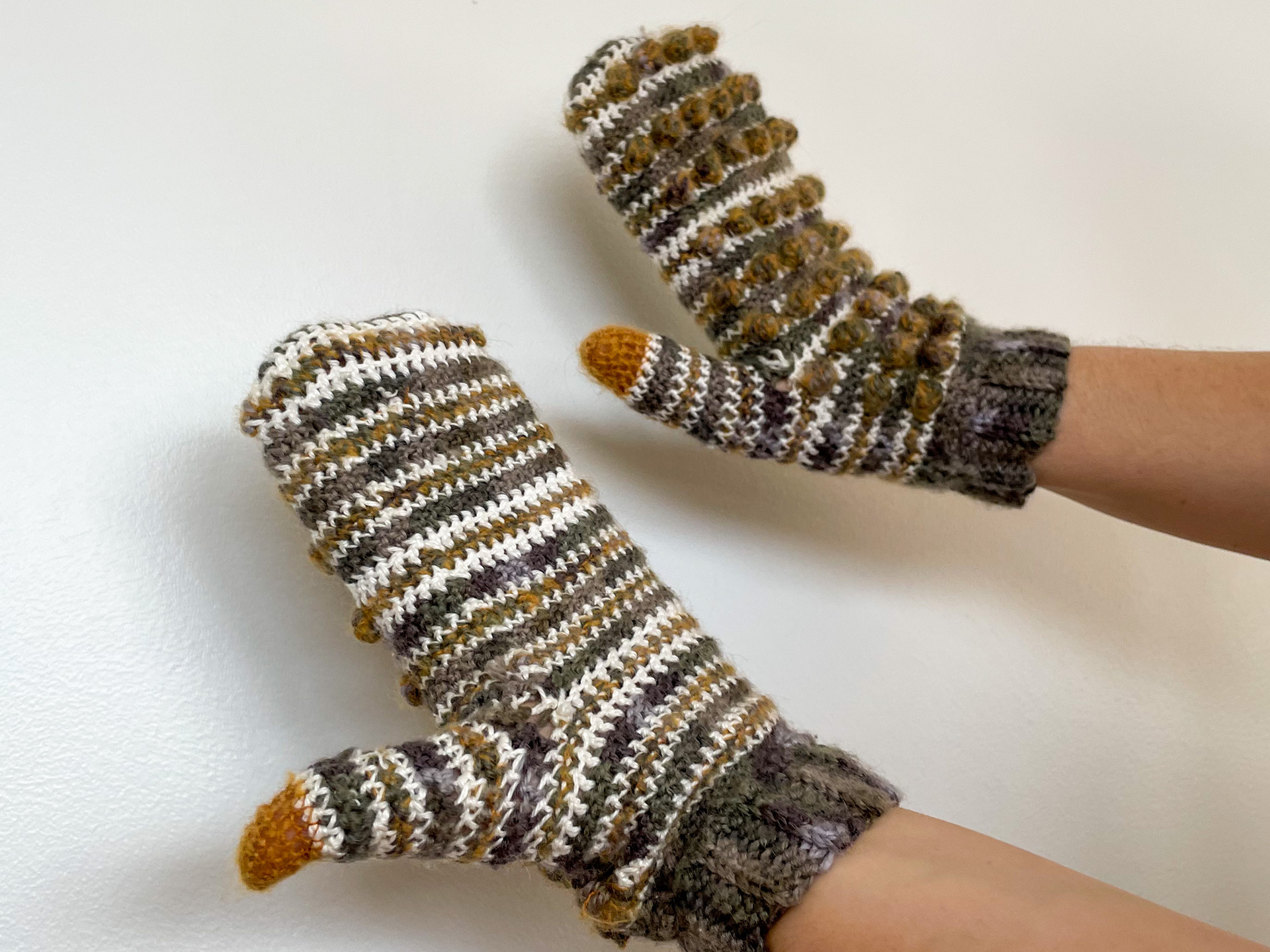
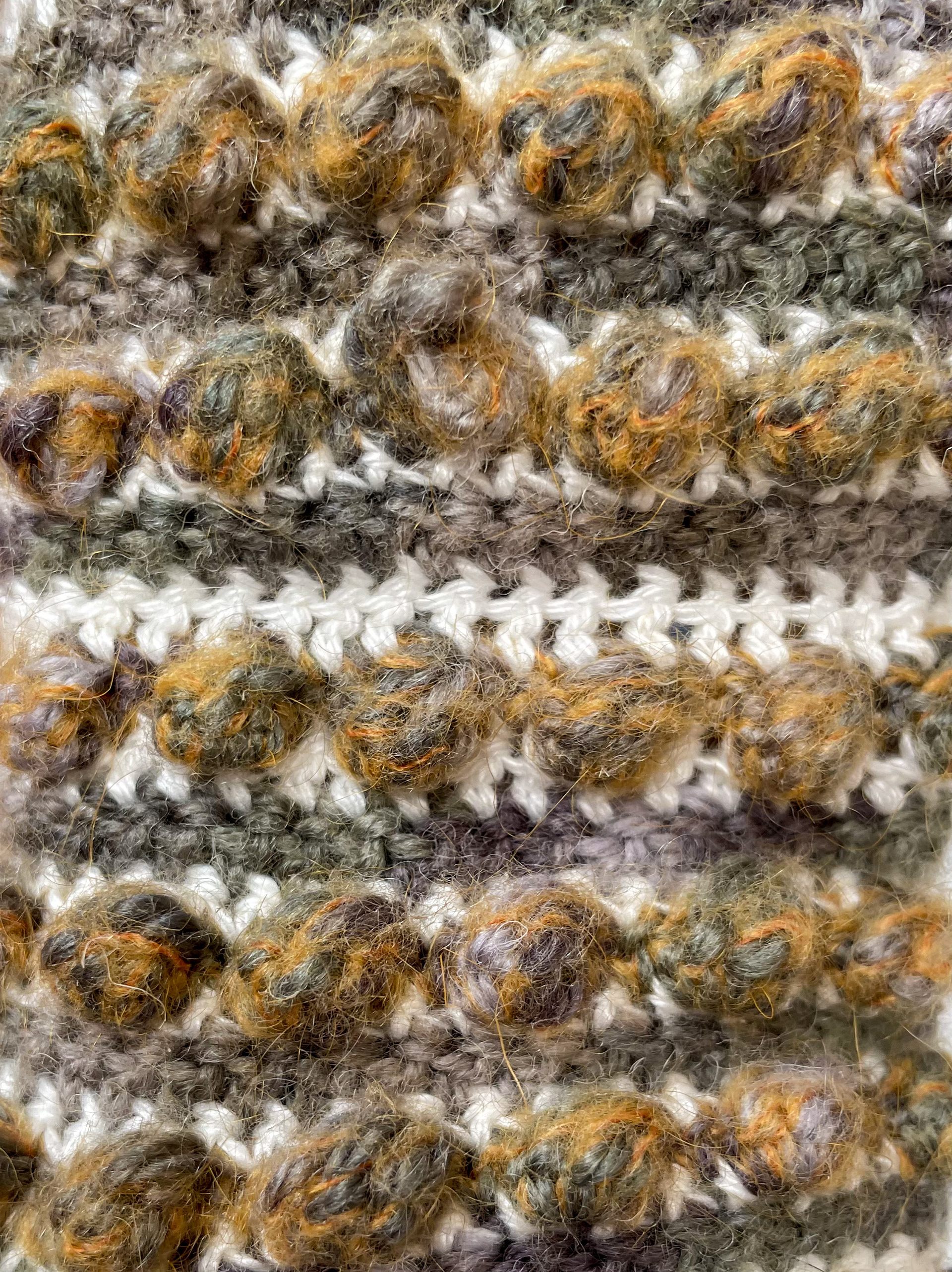
Using a plain mitten pattern found online I crocheted my first pair of mittens. I added my own twist on the design by adding the bubble stitches on the tops and crocheting the thumbs with exclusively mohair, to allow for easier access to phone usage. These were created mainly with second-hand cotton and acrylic yarns, with the only newly purchased fiber being the mohair for added warmth.
Crochet Chair Back Cover
Crochet for Dorm Life Solutions
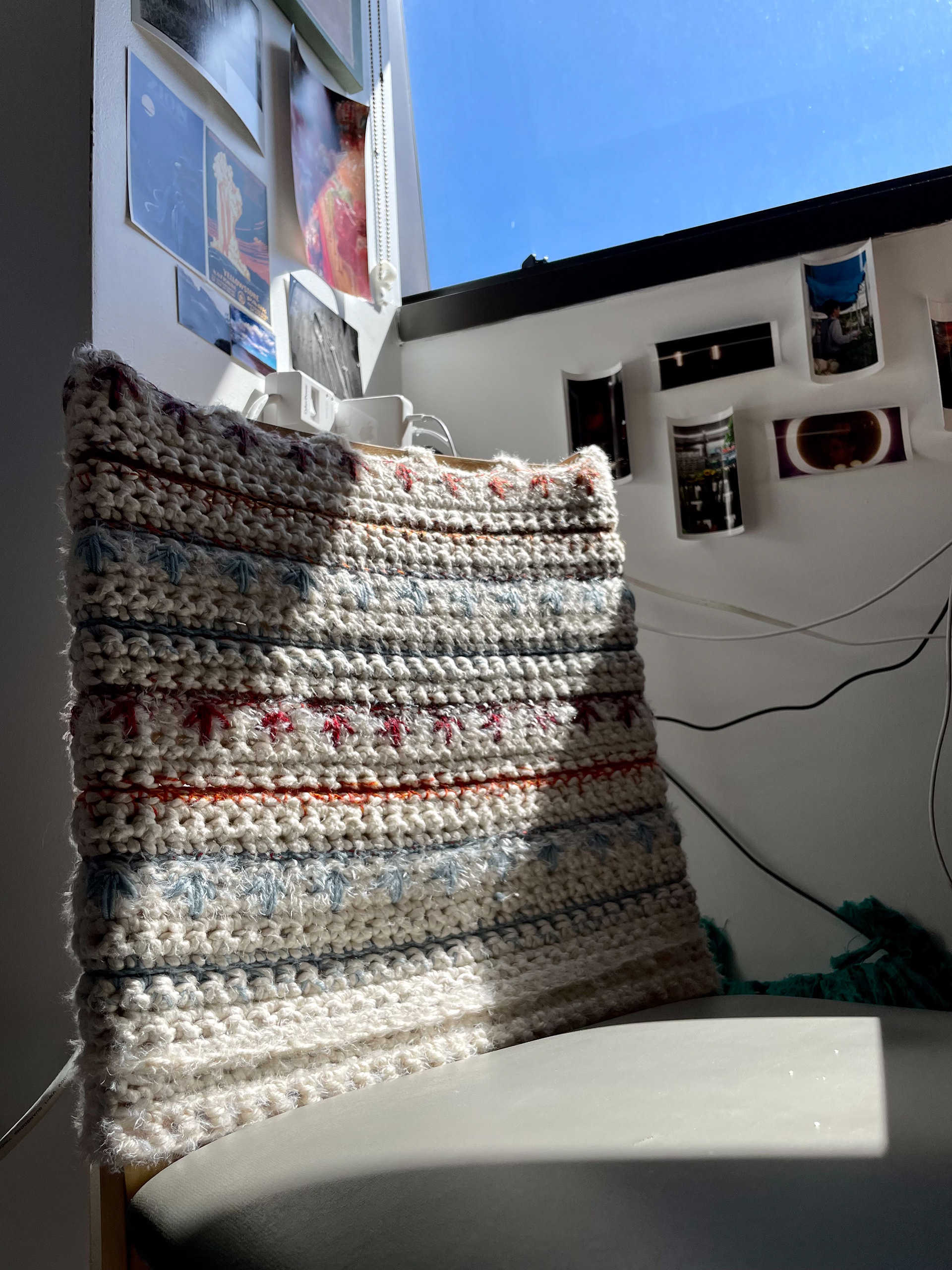
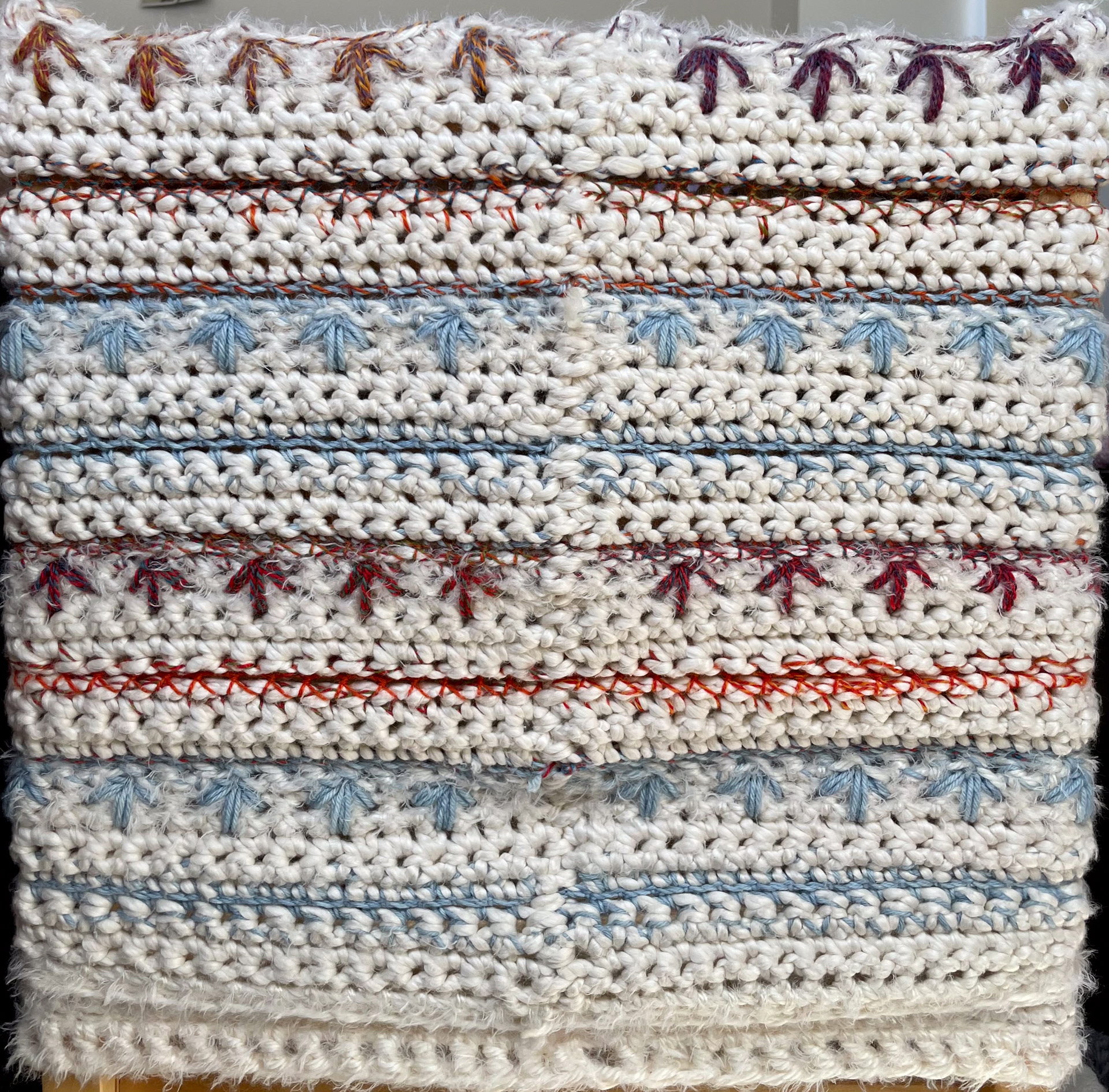
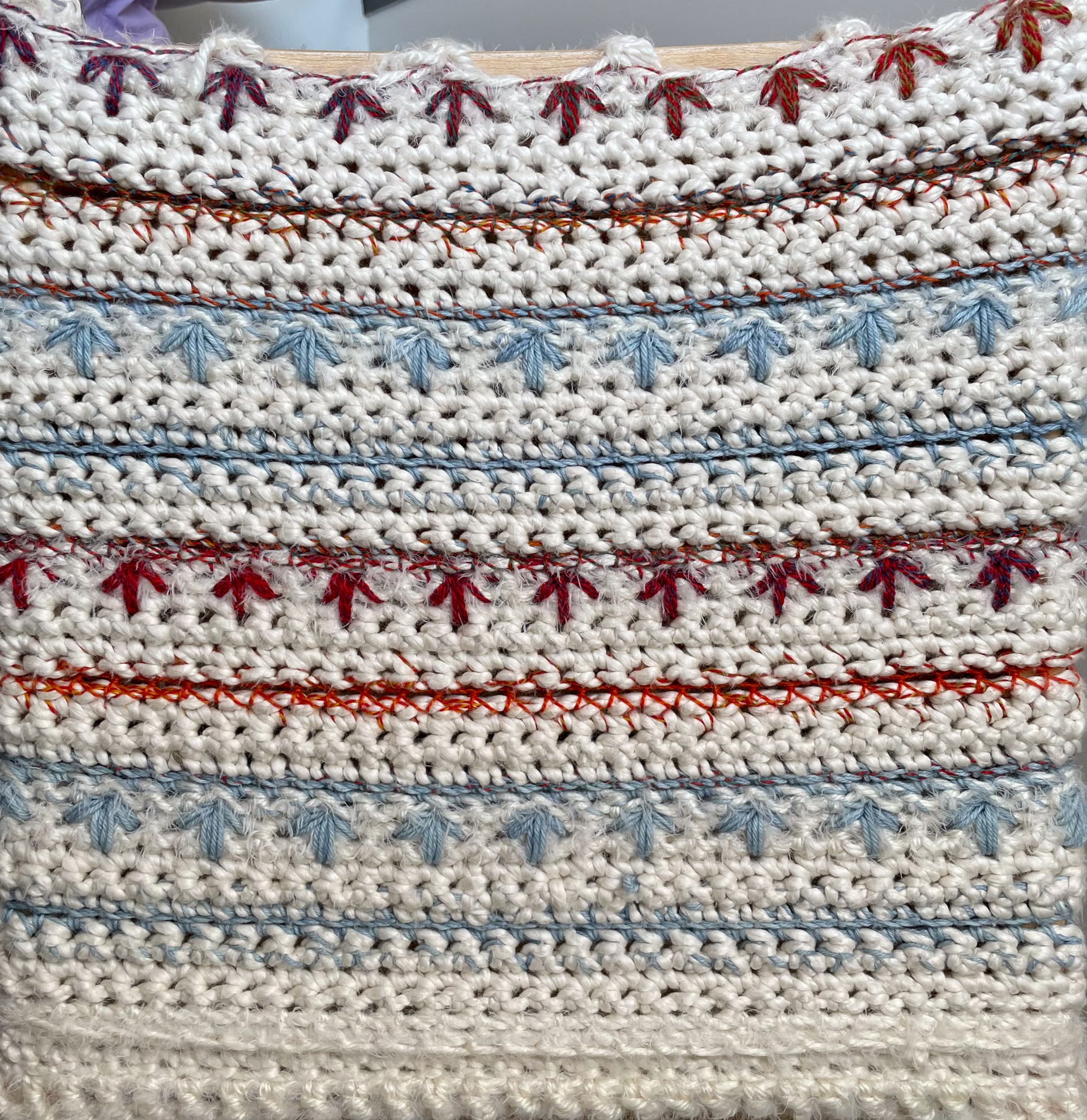
For three years of college, I lived in college dorms, where when I had to sit at my desk to do work, my back was subjected to the stiff wooden backs of our provided dormitory chairs. After my first year of having enough of them, I decided to design a solution by crocheting a cover using a thick wool fiber that would provide extra cushioning to my back during long nights of writing essays. The overall design was fairly simple using white wool yarn as the base with blue and multi-colored wool yarns for decoration with the attempt to add a little more color to my space. The result was a cozy covering that succeeded in making me want to spend more time working at my desk.
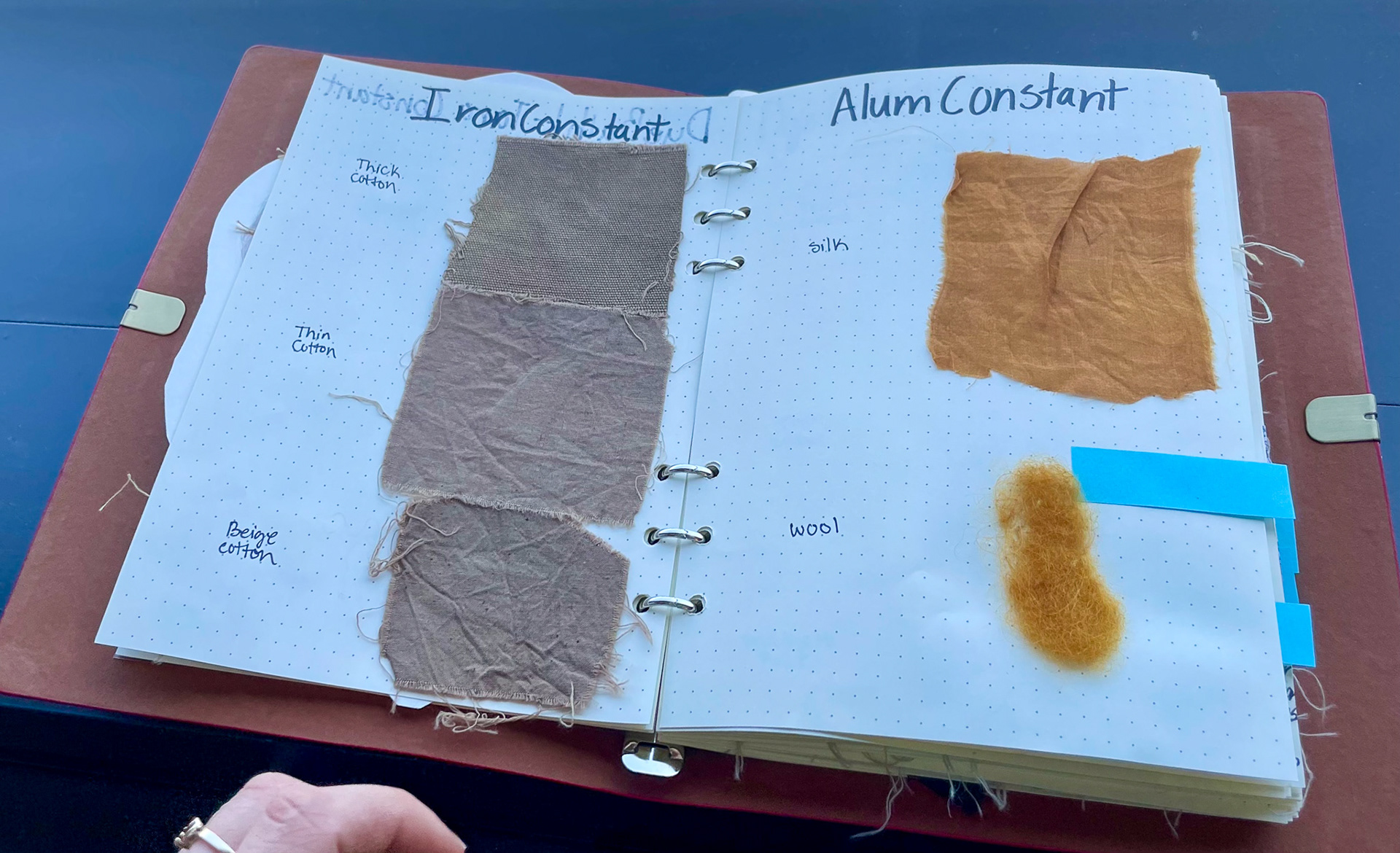
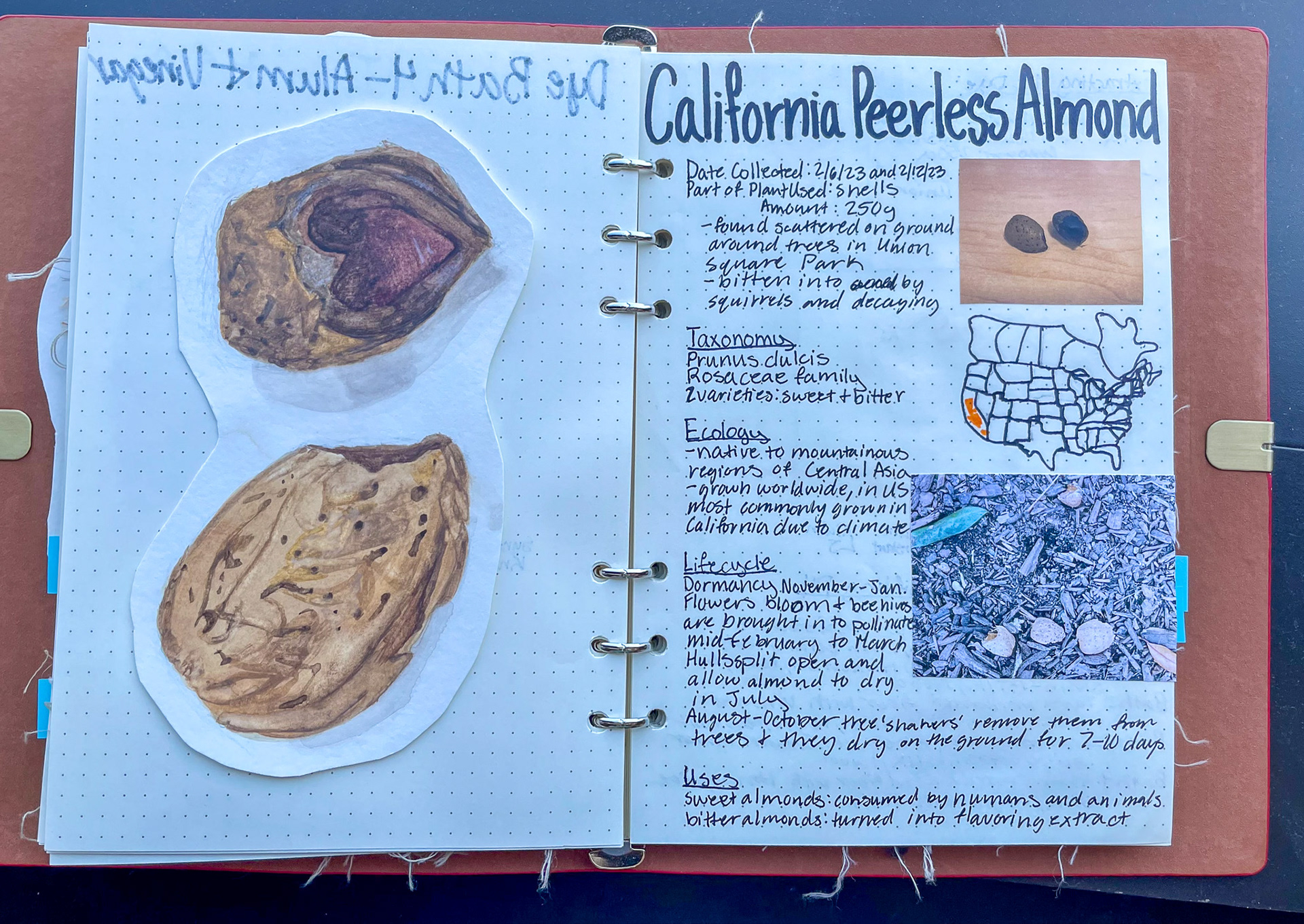
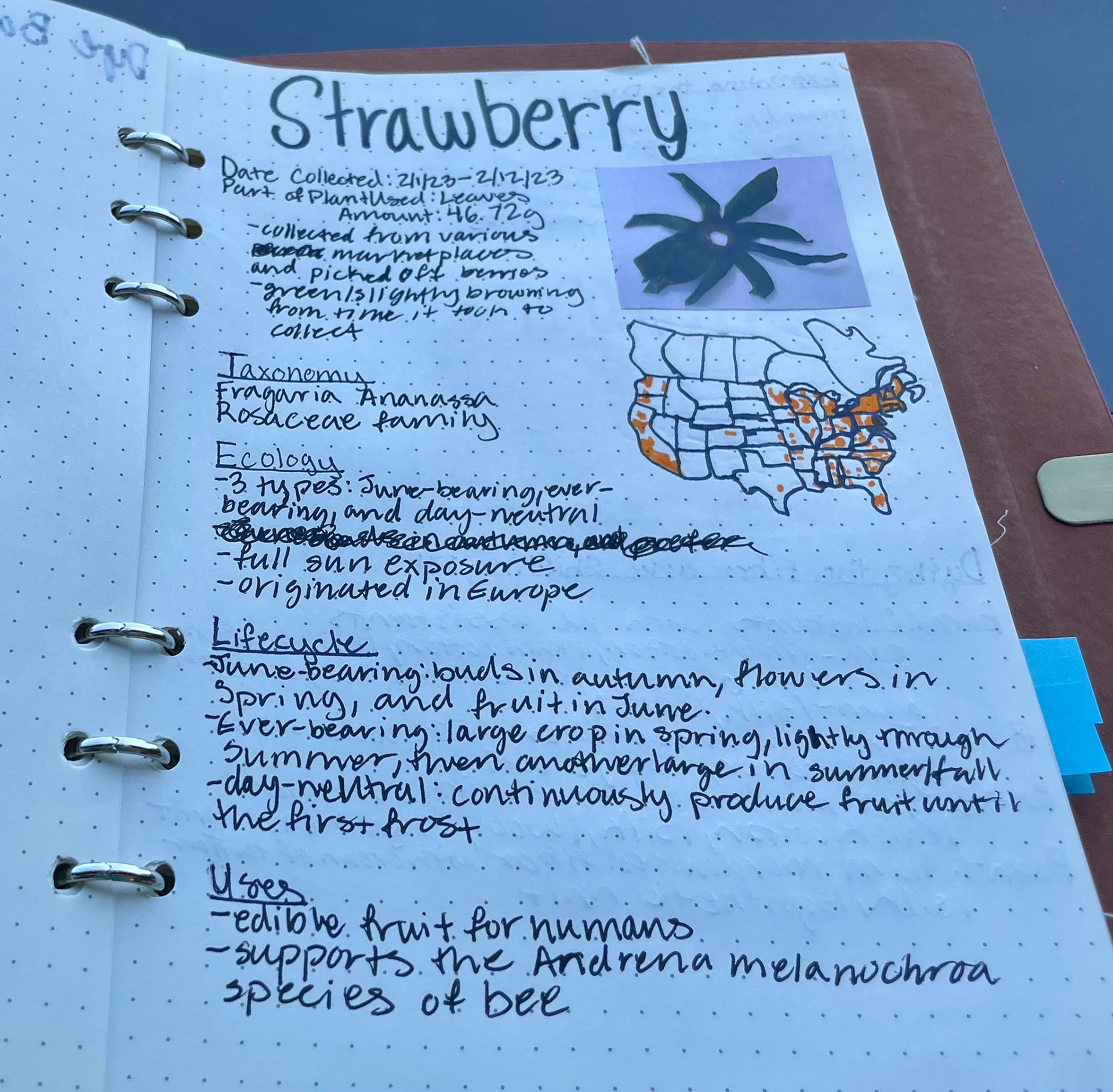
Natural Dye Almanac
Experimenting with Local and Recycled Natural for Dyeing Textiles
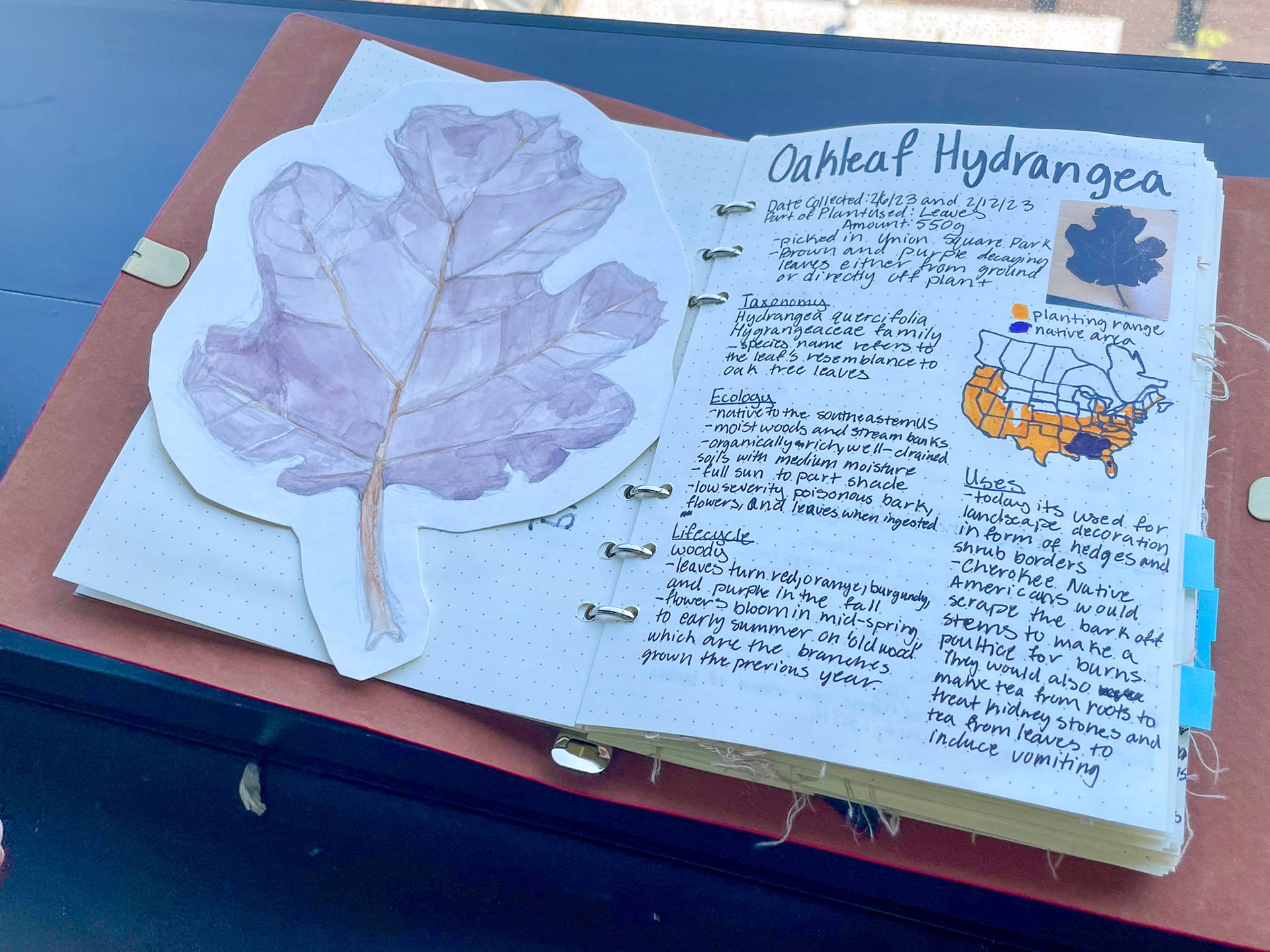
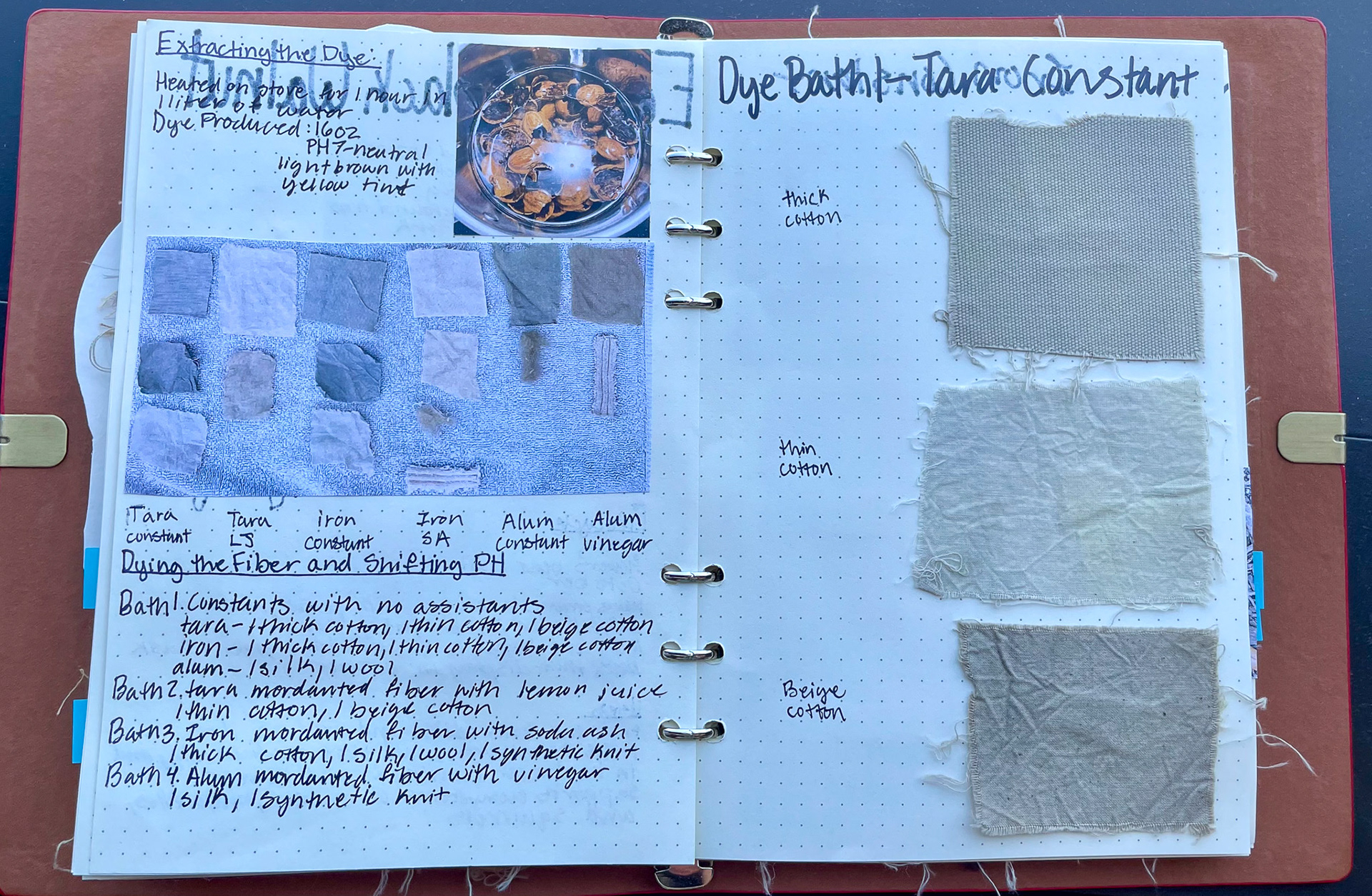
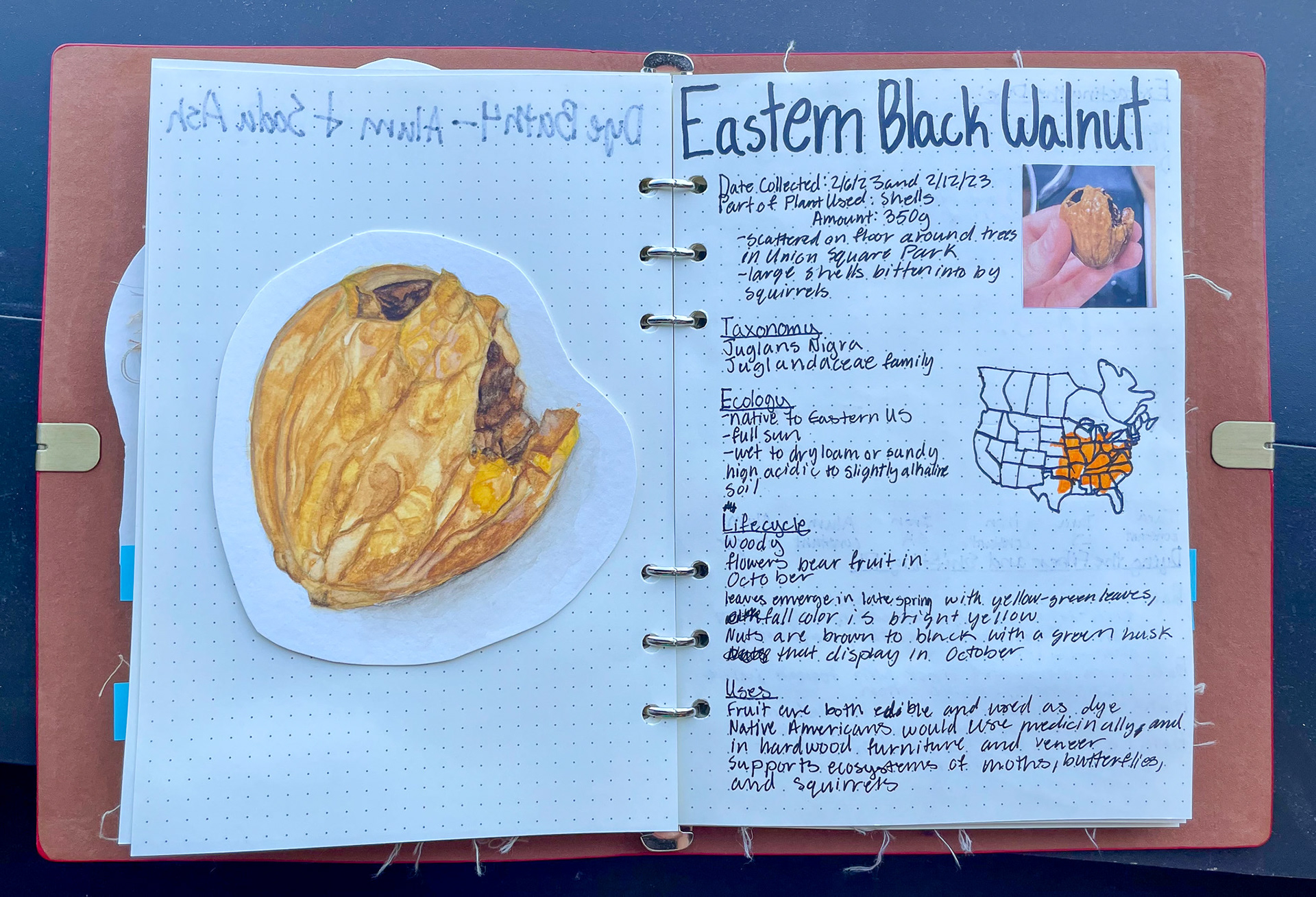
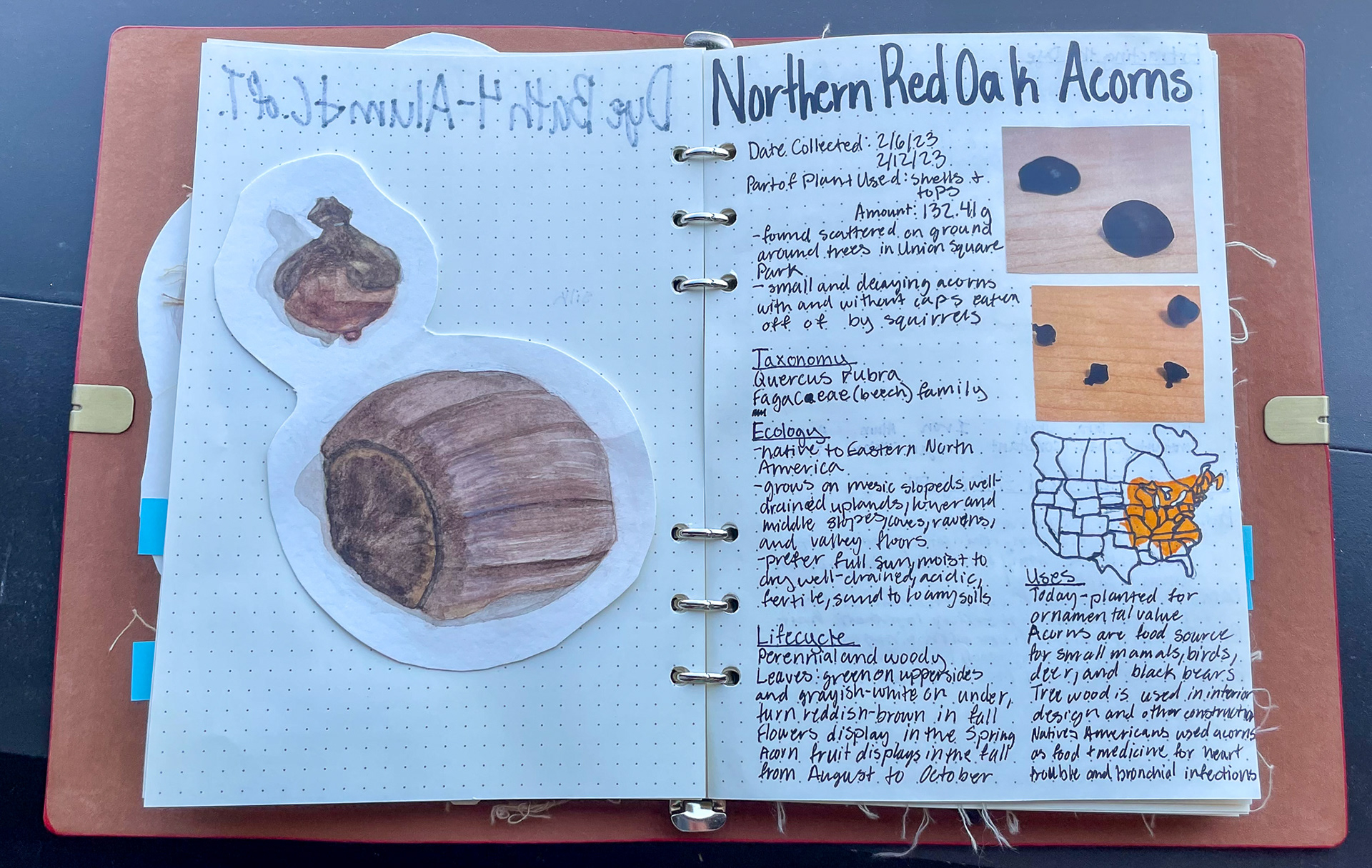
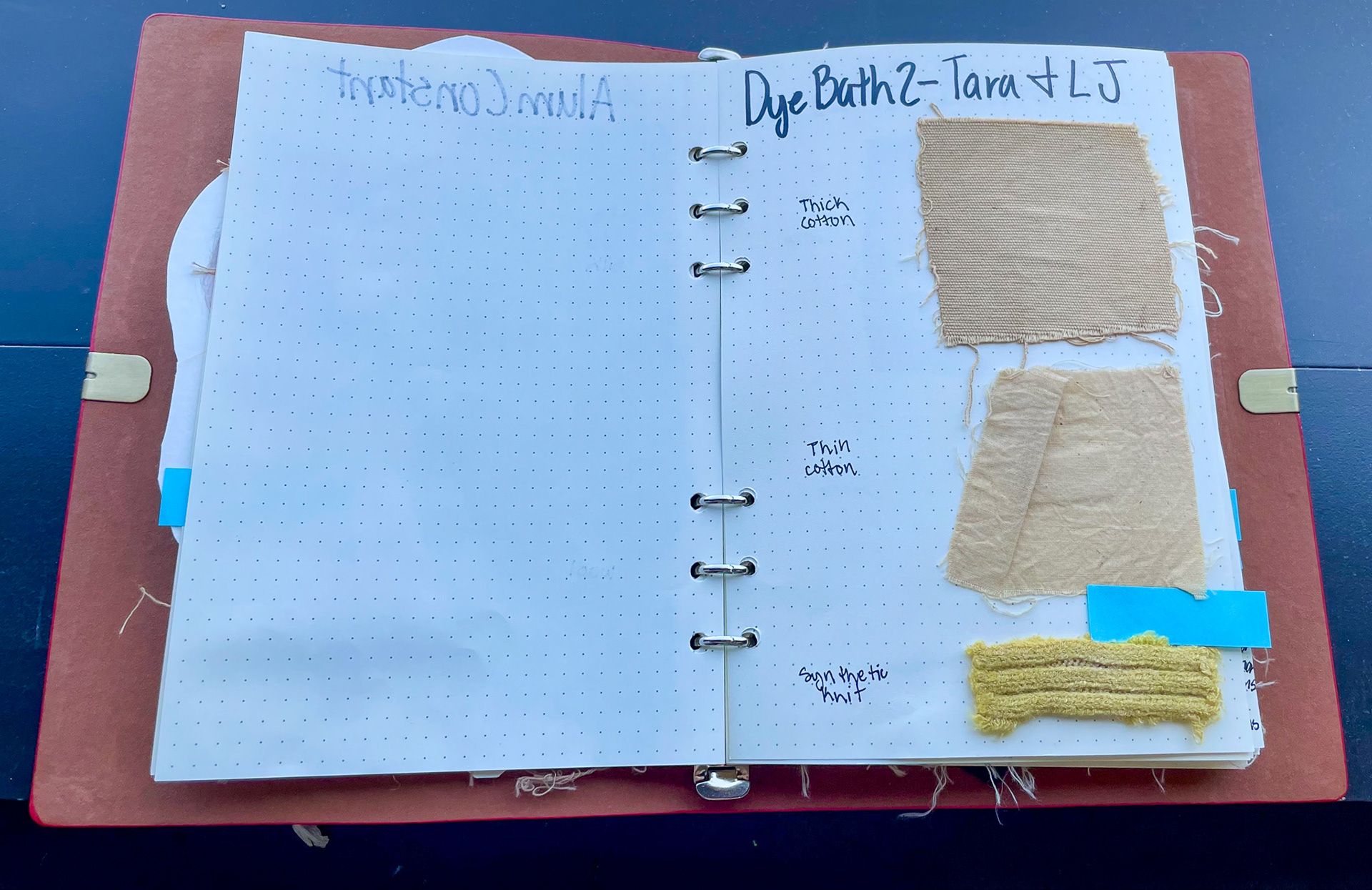
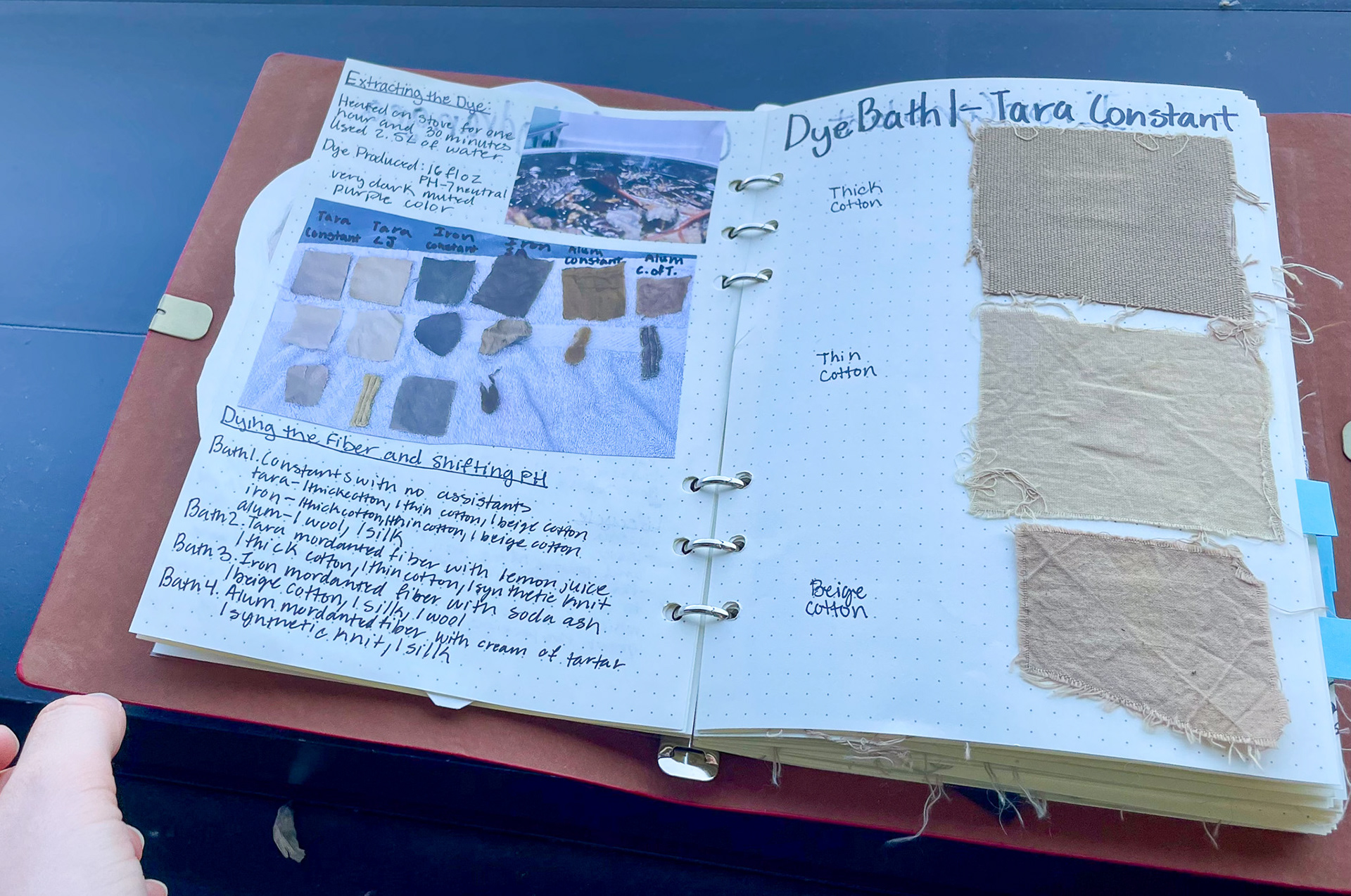
While taking a course called Community Supported Textiles, I had the opportunity to experiment with five locally sourced or personally recycled natural items for dyeing textiles. These included Strawberry leaves collected from strawberries I purchased and ate over many weeks, Oakleaf Hydrangea leaves found in Union Square Park, and the shells of Eastern Black Walnuts, Northern Red Oak Acorns, and California Peerless Almonds all also found in Union Square Park. After collecting my dyeing resources, I boiled the items to extract their dye, then conducted four baths for each dye. The first bath being my constant, with no PH assistants to shift colors, with the next three being baths Tara Powder mordanted textiles dyed with lemon juice, Iron mordanted textiles dyed with Soda Ash, and Alum mordanted textiles with Vinegar. The textiles used were all recycled swatches found in the scrap bins of the fashion department at my school and included silks, wools, and three types of cotton weaves.
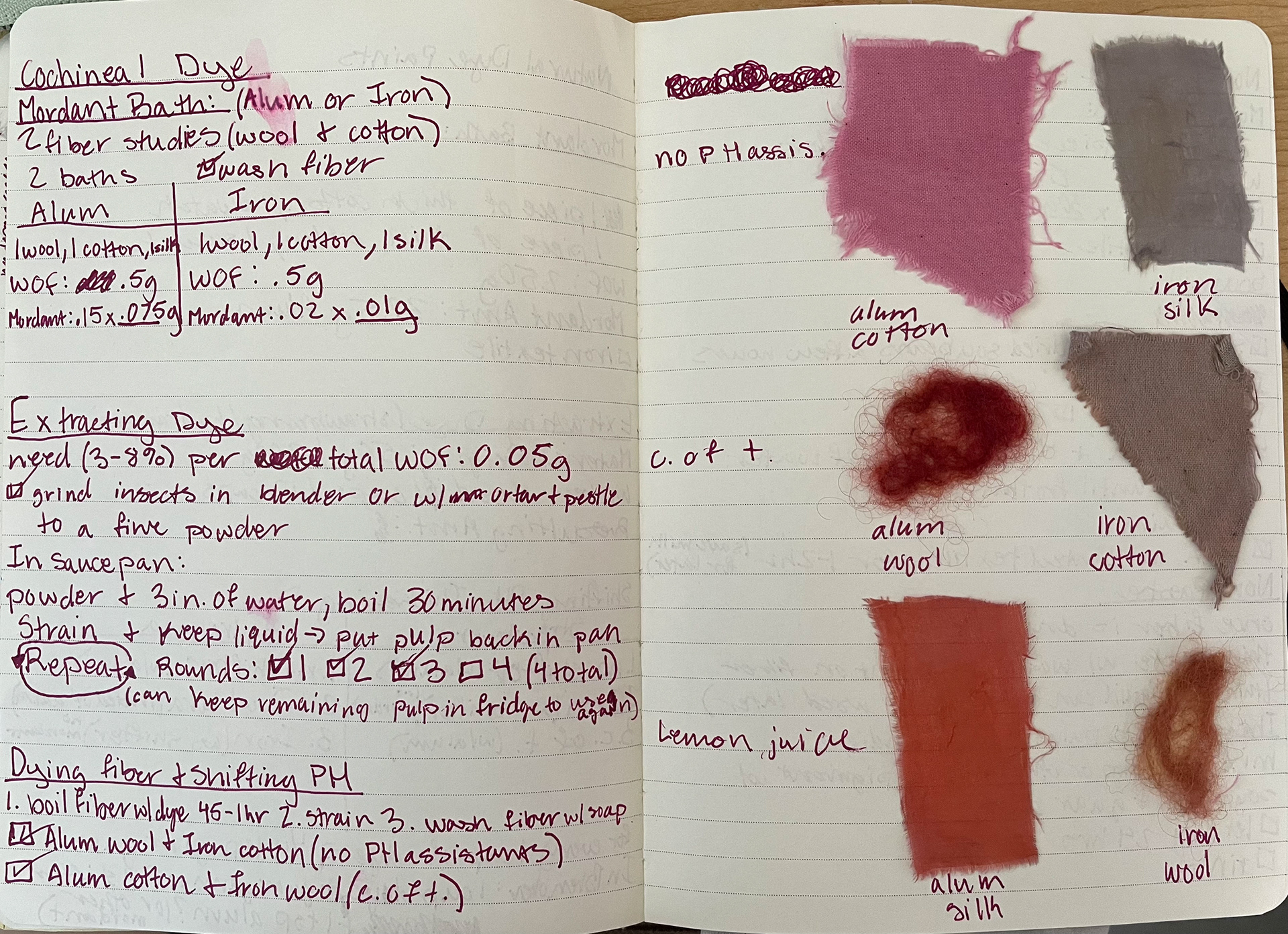
Cochineal Dyeing
Experimenting with Bugs
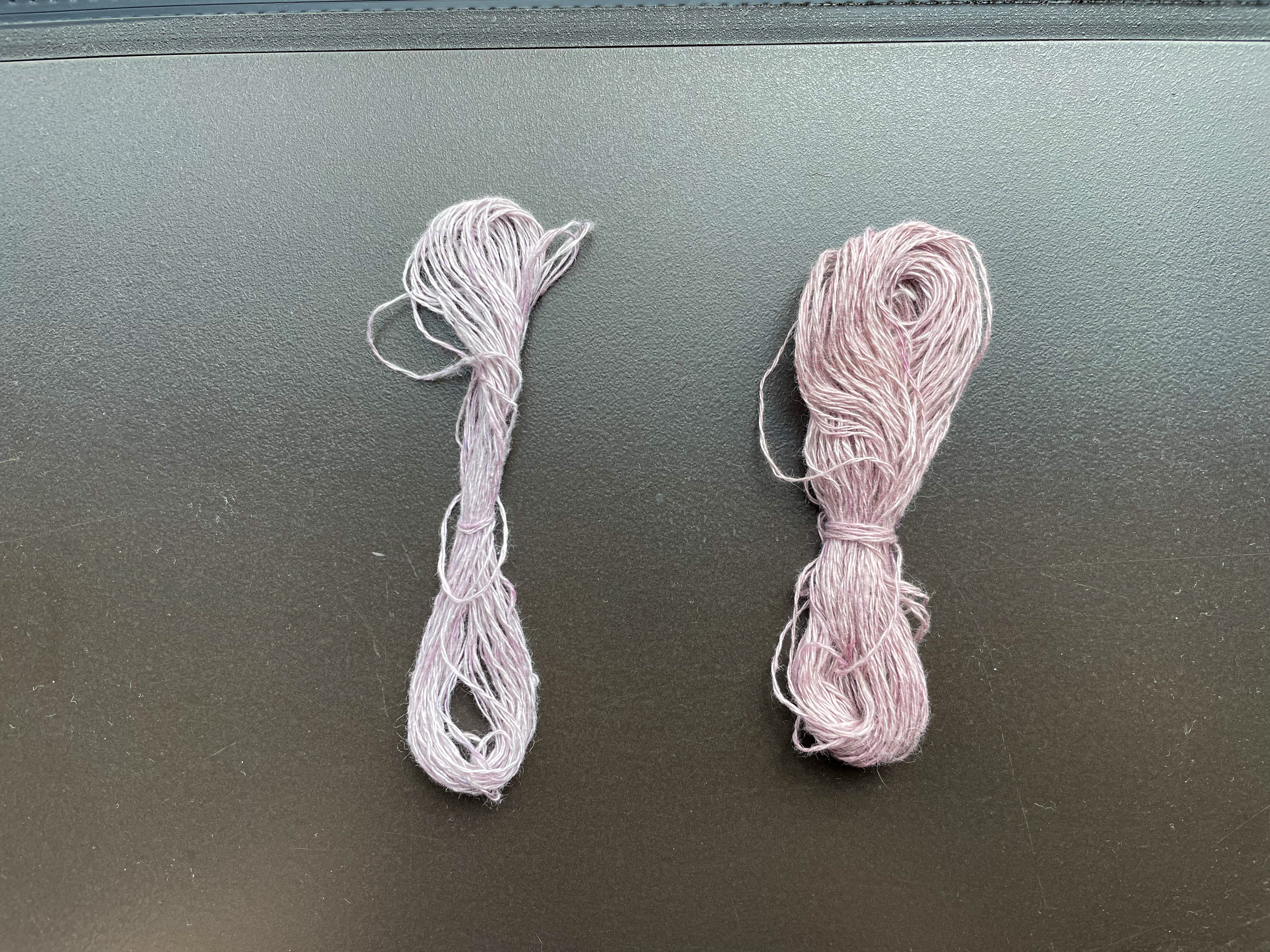
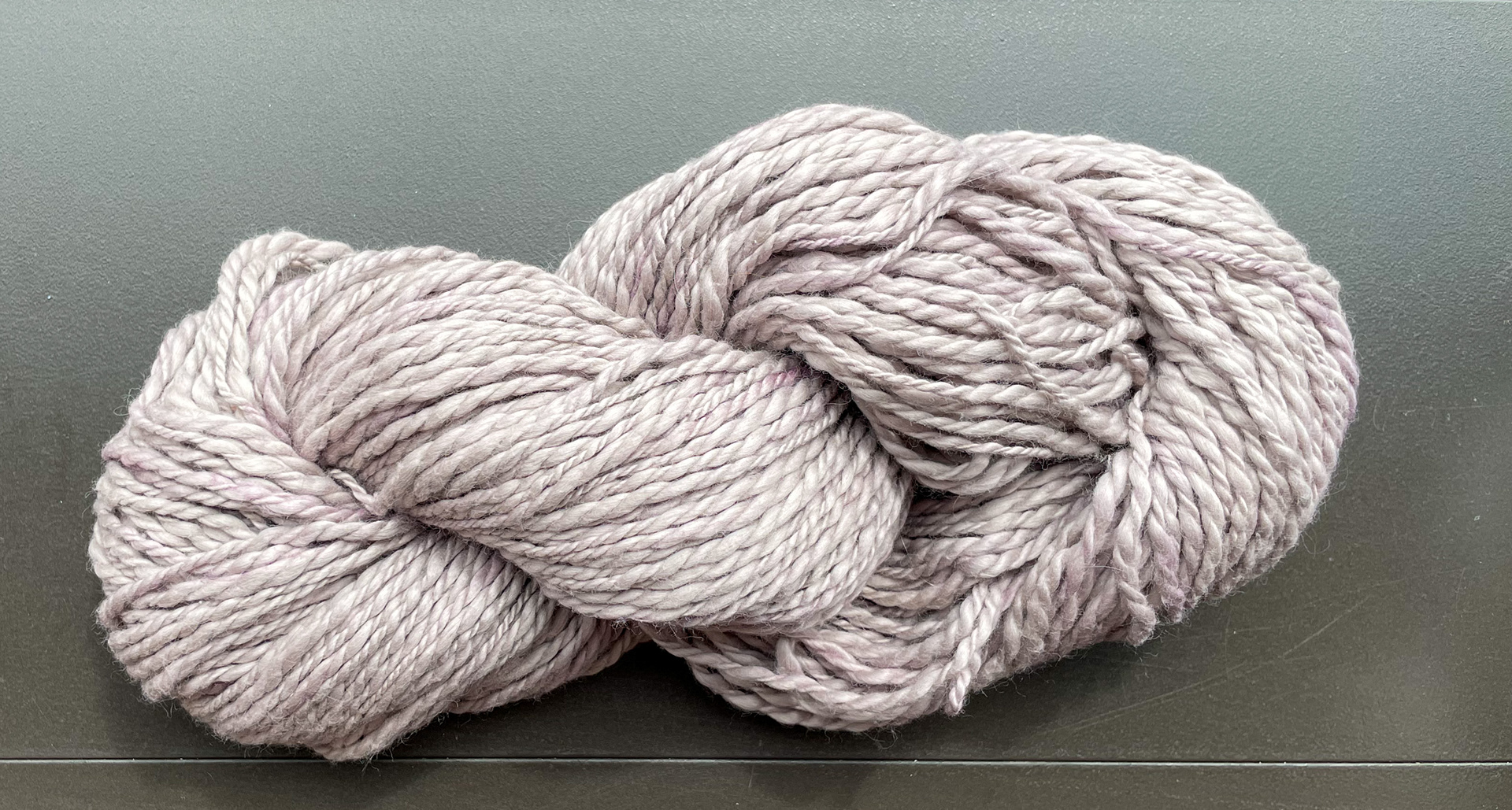
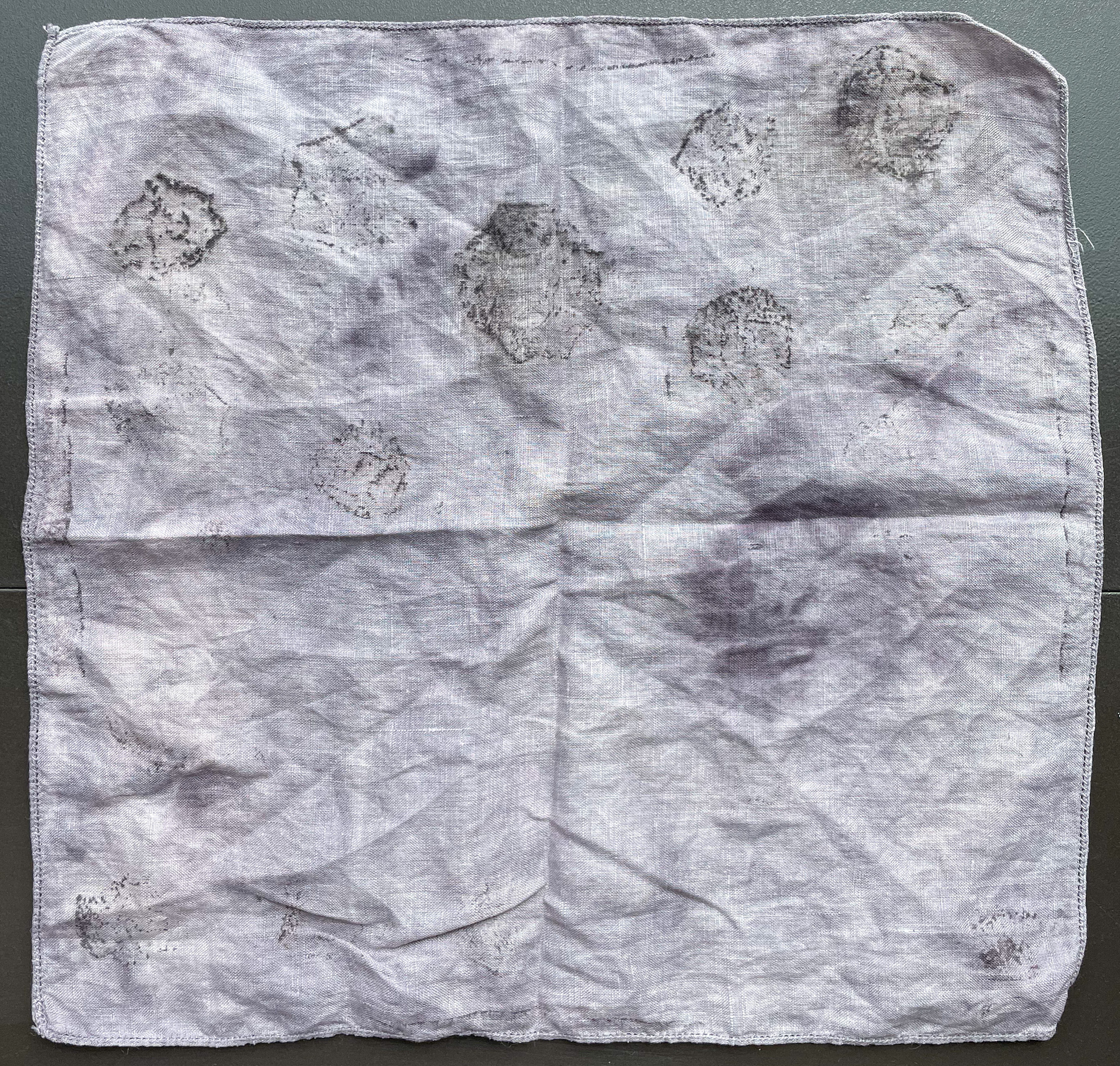
While taking a course called Community Supported Textiles, I also had the opportunity to experiment with the dyeing abilities of the long used historical cochineal bugs across silk, cotton, wool, and linen.